

Classic: Clio Renault Sport Phase 1 & 2
Words: Kyle Cassidy | Photos: Alex Schultz
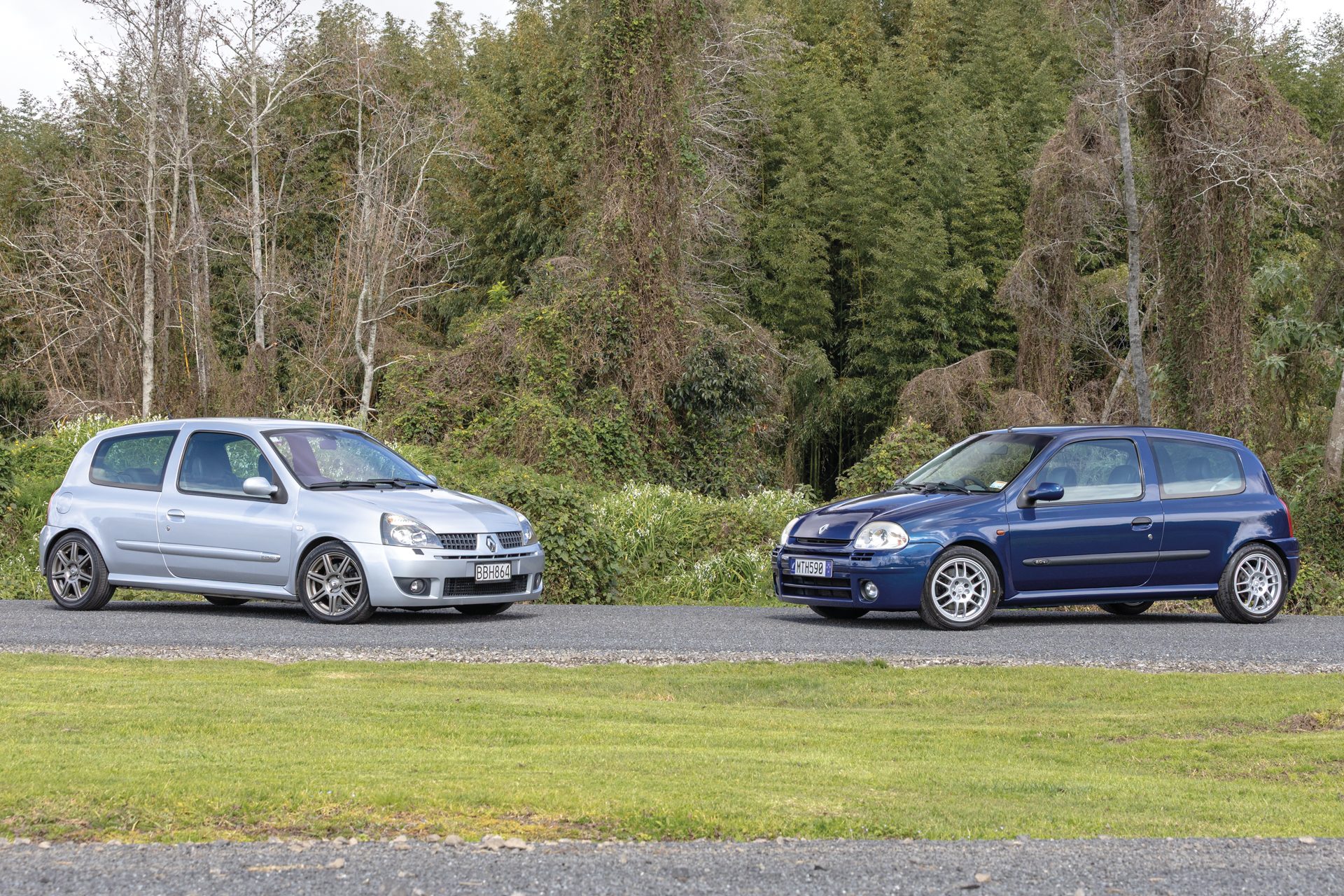
The Clio Renault Sport is quickly attaining cult status now that it’s been around for a quarter century. It’s so endearing, this fan has two of them!
Back when the Clio Renault Sport was a debutant, the market was flush with hot hatches. It was a sweet era for feisty, lithe hatches. Renault was an early adopter of the genre, the Renault 5 given the Alpine treatment and appearing a few months before the Golf GTi. The lively front-driver would get a boost via a turbo engine option later in its life too. Though things got crazy with the mad Renault 5 Turbo, perhaps the world’s first mega-hot hatch with its mid-mounted engine driving the rear wheels. The second gen 5 would also gain a warmed over GT Turbo version as Renault looked to keep the sporting spirit alive. When the 5 was finally replaced by the cute little Clio in 1990, it wasn’t long before a go-fast 16V model was introduced and followed up by the Clio Williams, which has become a cult classic.
So when the Clio II debuted in 1998, Renault Sport was quick to work its magic on the new super mini. The Clio Renault Sport 172, or Clio R.S for short, followed the usual recipe of adding a bigger engine and a few suspension mods while the styling was given a dusting of upgrades. The Clio R.S would receive the Laguna’s 2.0-litre, 16 valve four. With a better inlet manifold feeding a cylinder head machined by Mechachrome, the maker of Renault F1 engines, the freer flowing four could spin to 7200rpm. Power was rated at 127kW which is 172 PS, hence the name, and delivered at a heady 6250rpm. This was sent to the front wheels via a five-speed manual, the only transmission option.
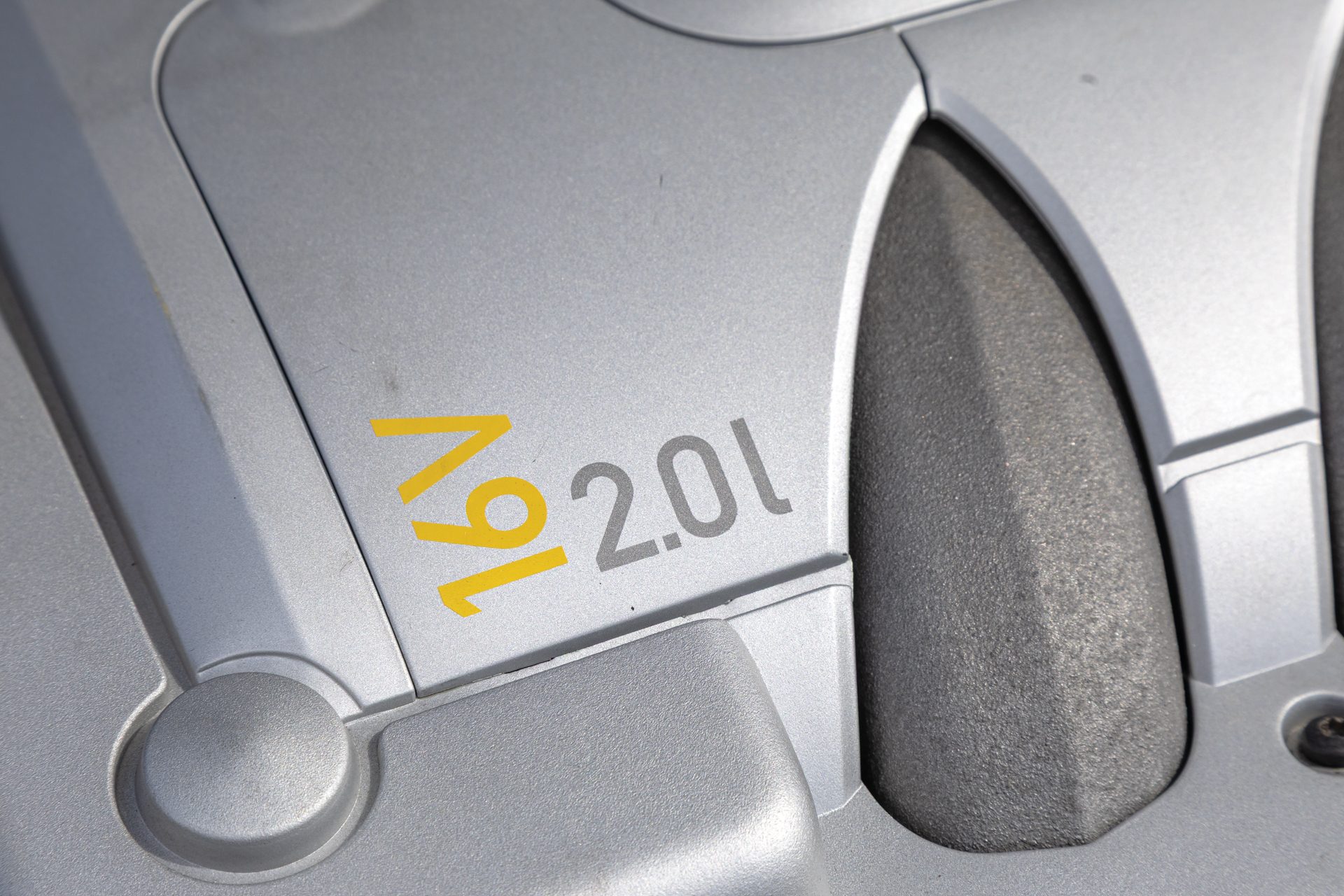
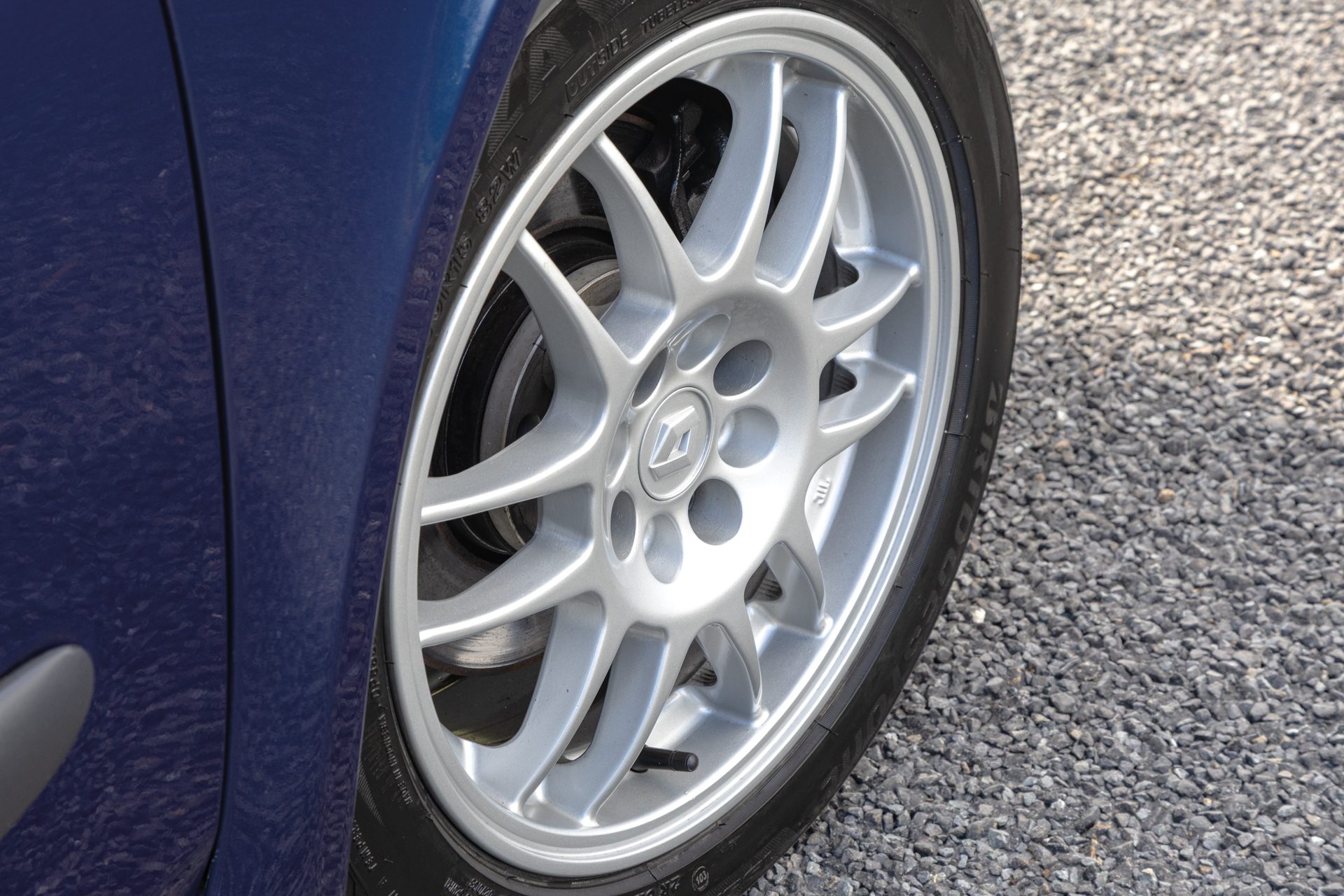
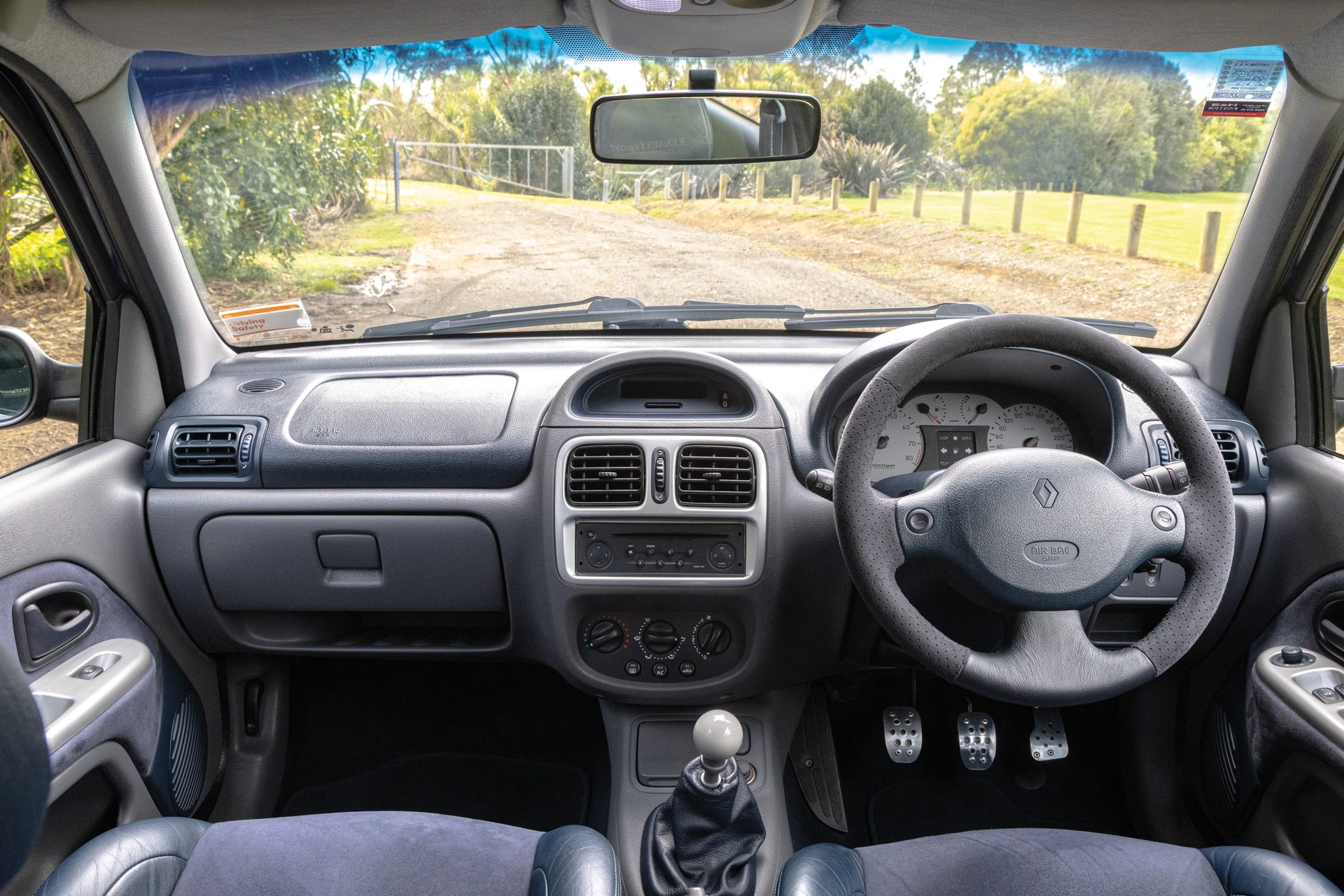
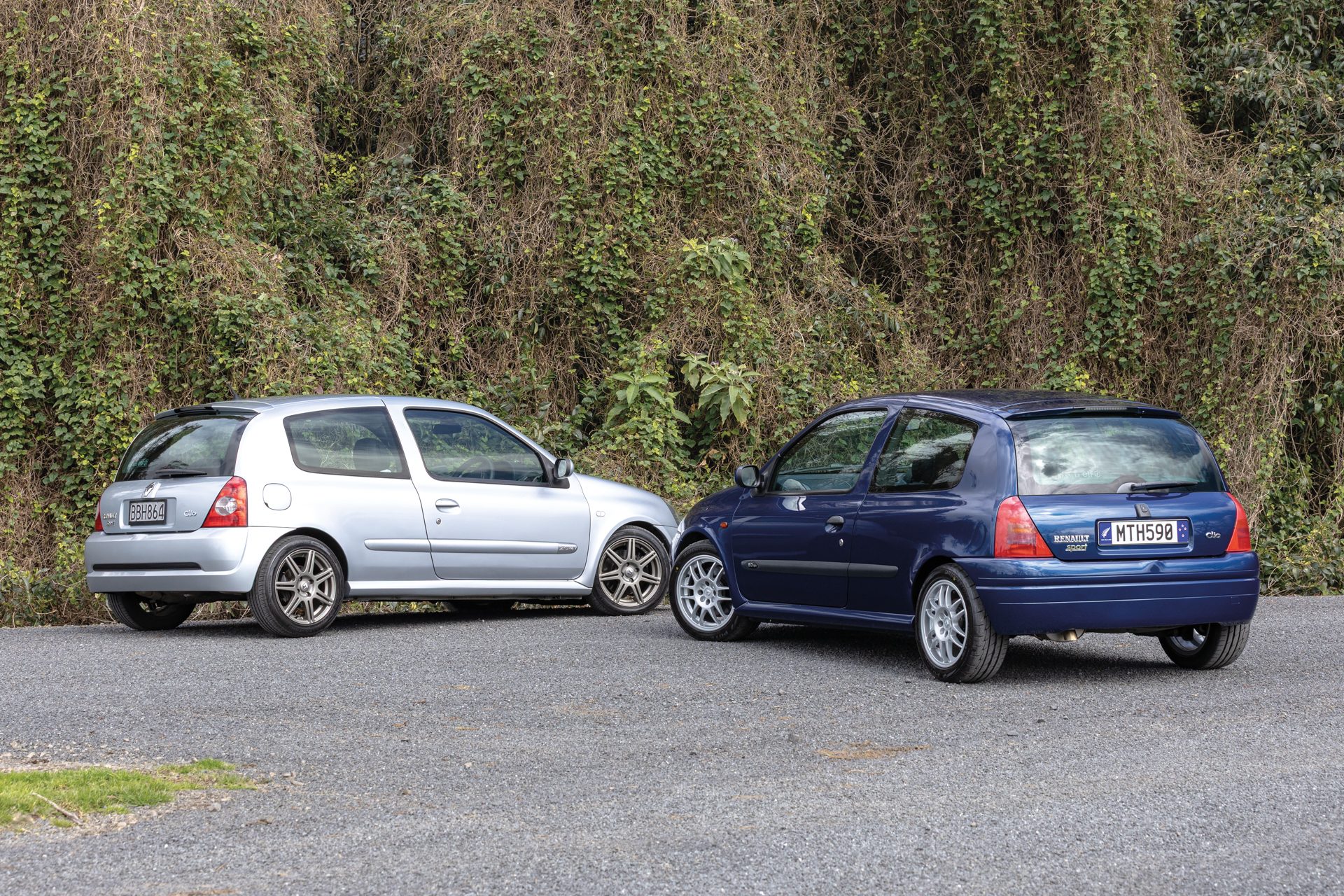
In terms of the chassis, Renault Sport threw some upgraded springs and dampers at it and hooked up some beefier roll bars. Some fiddling of the suspension geometry helped push the tracks out. And bolted up to the end of the axles where some tasty 15-inch OZ alloys. Some of the styling features included slightly wider arches, reformed bumpers and side skirts. This all describes the blue Clio you see here. The silver Clio is what they call a Phase II coming along in 2001, adopting the new styling of the made-over base Clio with different lights and grille treatment. It gained a few more features like Xenon lights, climate control aircon, and from 2002, stability control was fitted. The OZ alloys were phased out for a set of larger Renault-designed 16s. There were a few engine changes, including a revised cylinder head and the adoption of an electronic throttle body.
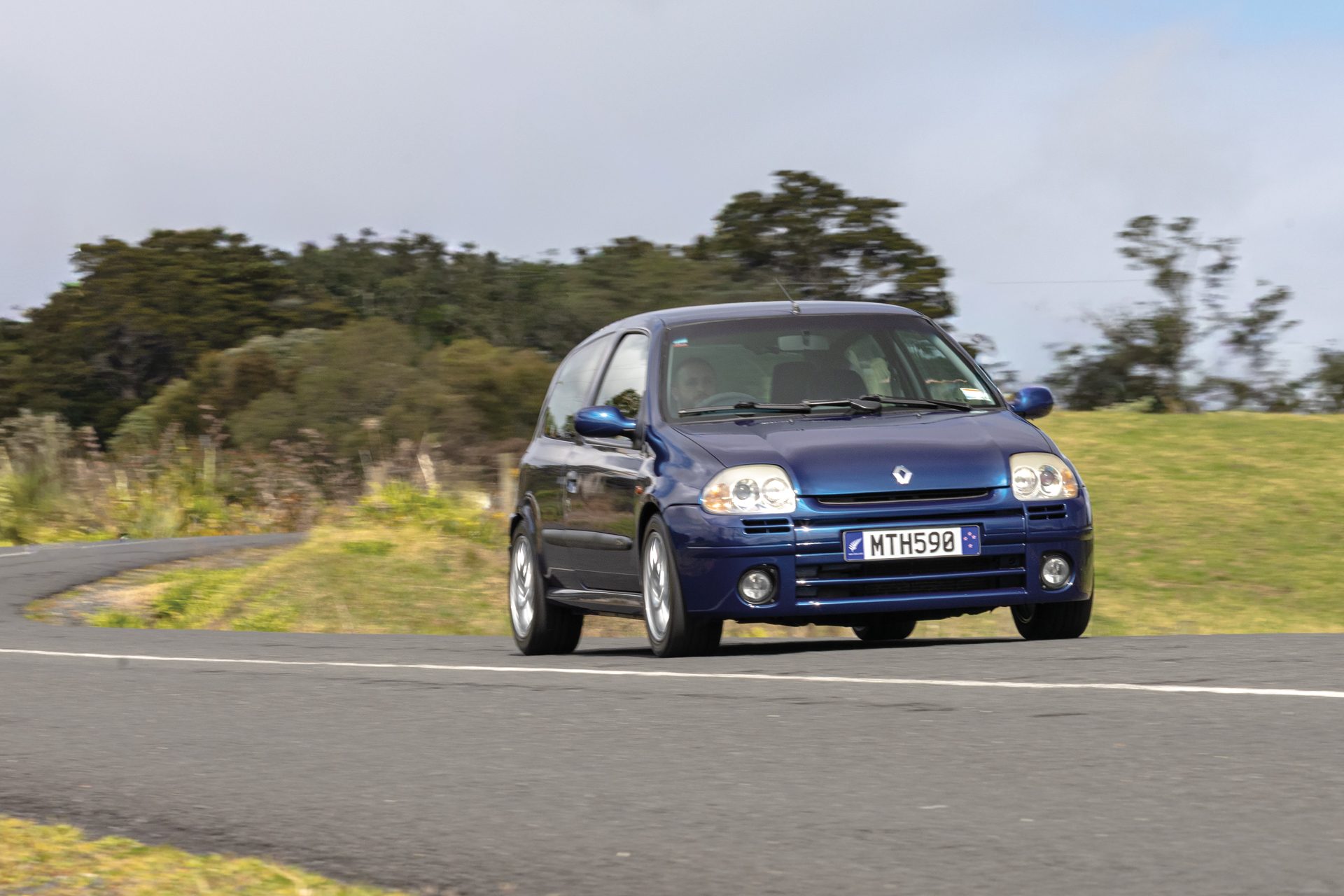
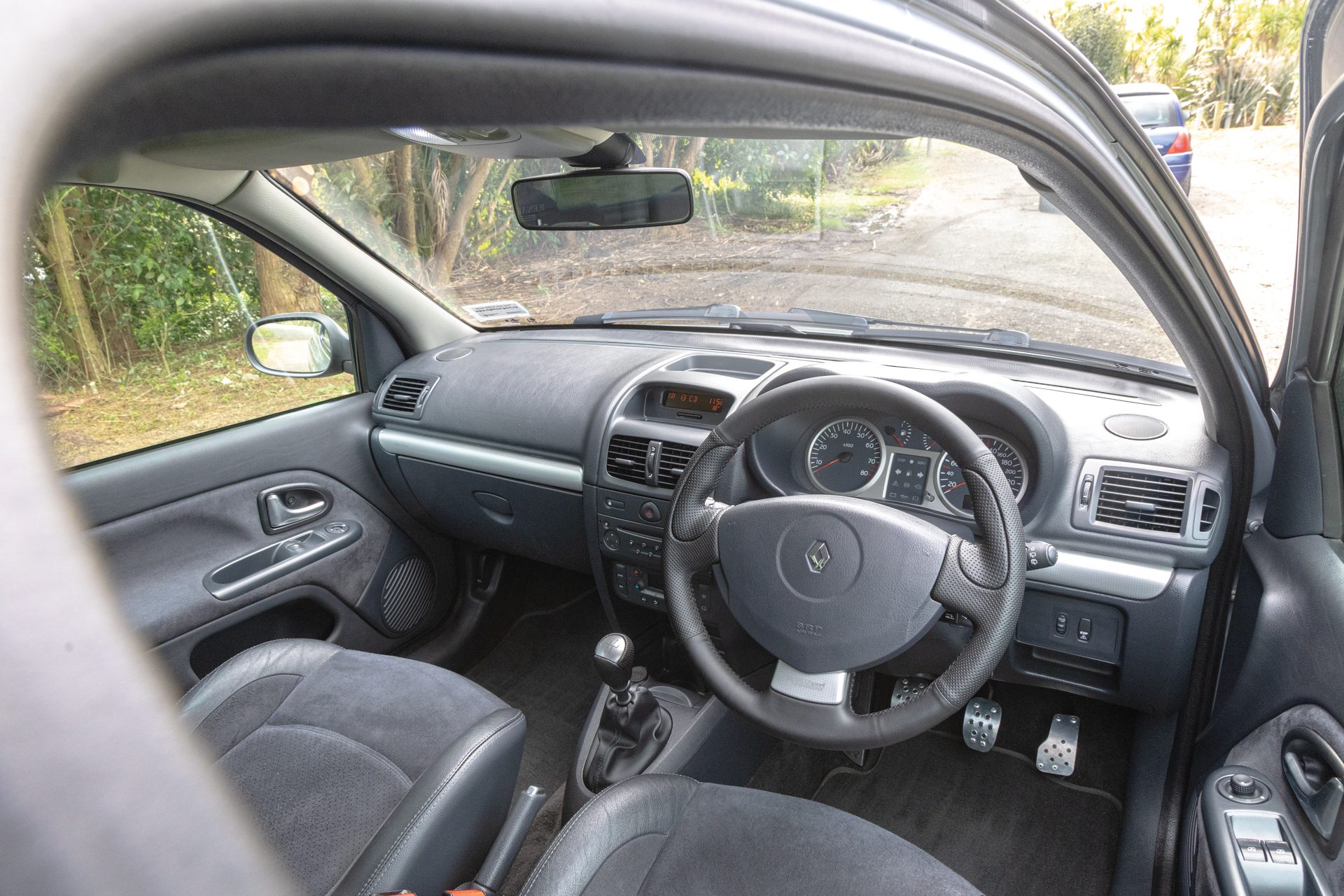
Twenty five years down the track, the Clio R.S is now nudging classic status. Though it’s from another era, it’s a modern machine with air con, ABS, leather seats, airbags and everyday drivability and reliability. These two Clios are owned by Ariel Moreno, who uses the R.S daily.
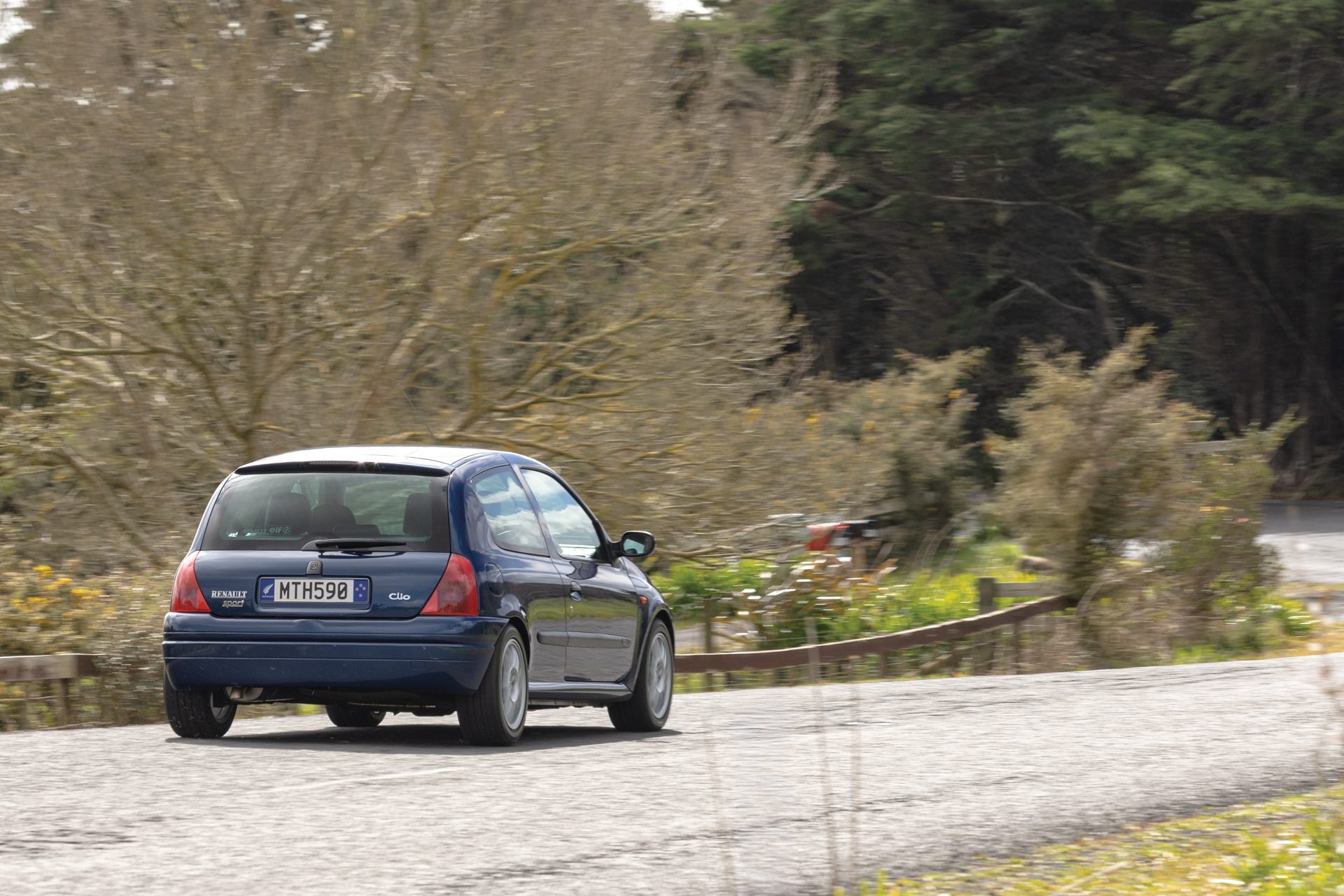
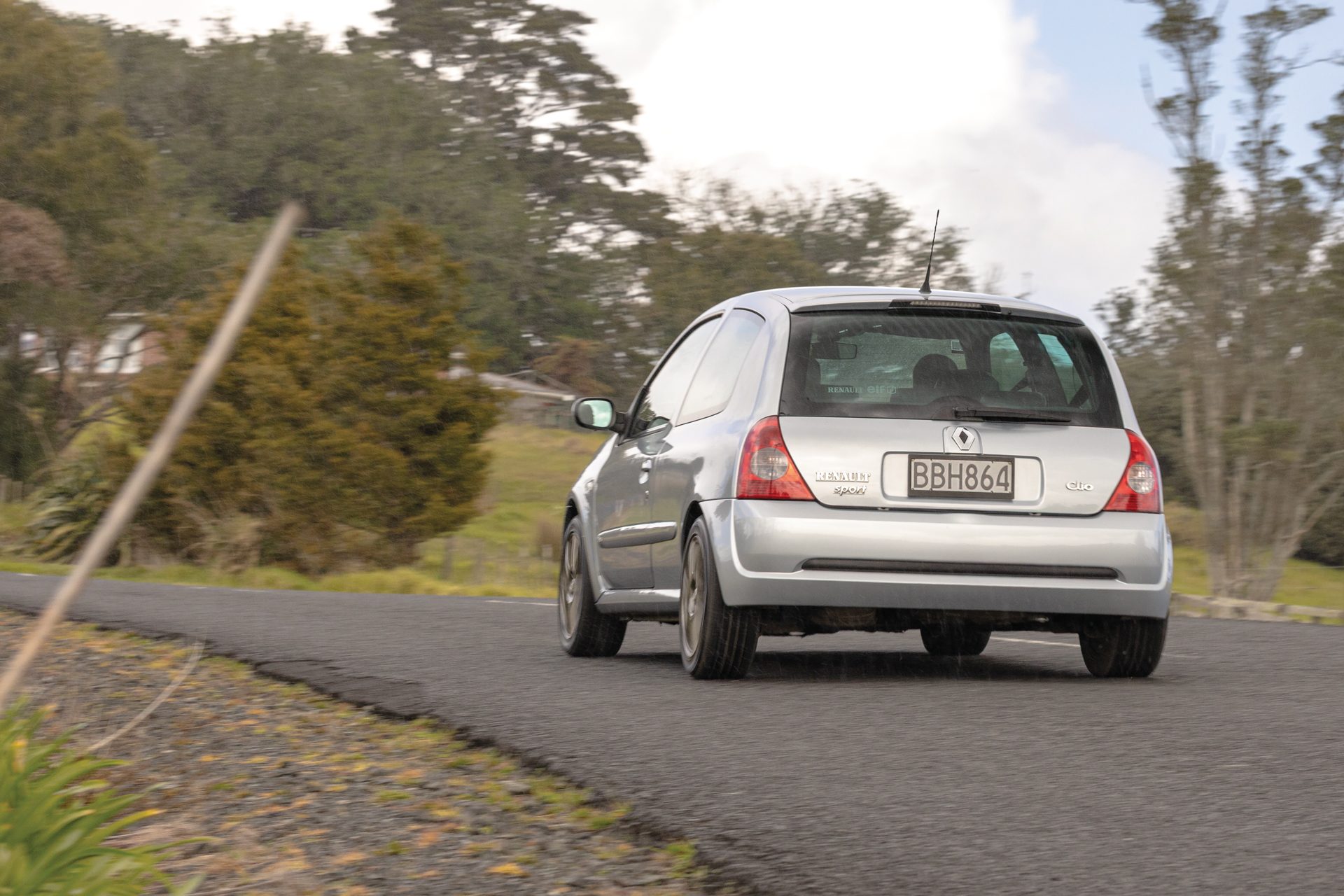
Growing up in Argentina, the Clio R.S was the car he really admired. “It was just something I always wanted. My first car was a Clio but the 1.6 was all I could afford. It was always the dream to get the R.S model.”
While he says he could never afford one in Argentina, after a few years in New Zealand he decided it was time to fulfil the dream. “It was back in 2020, during the lockdown. I was not working and bored. I was online looking for stuff to buy and I found the blue one in the South Island.” It was in a sound condition but he set about fixing the minor issues and getting on top of the maintenance. “It’s a never-ending story with these cars as they get older.”
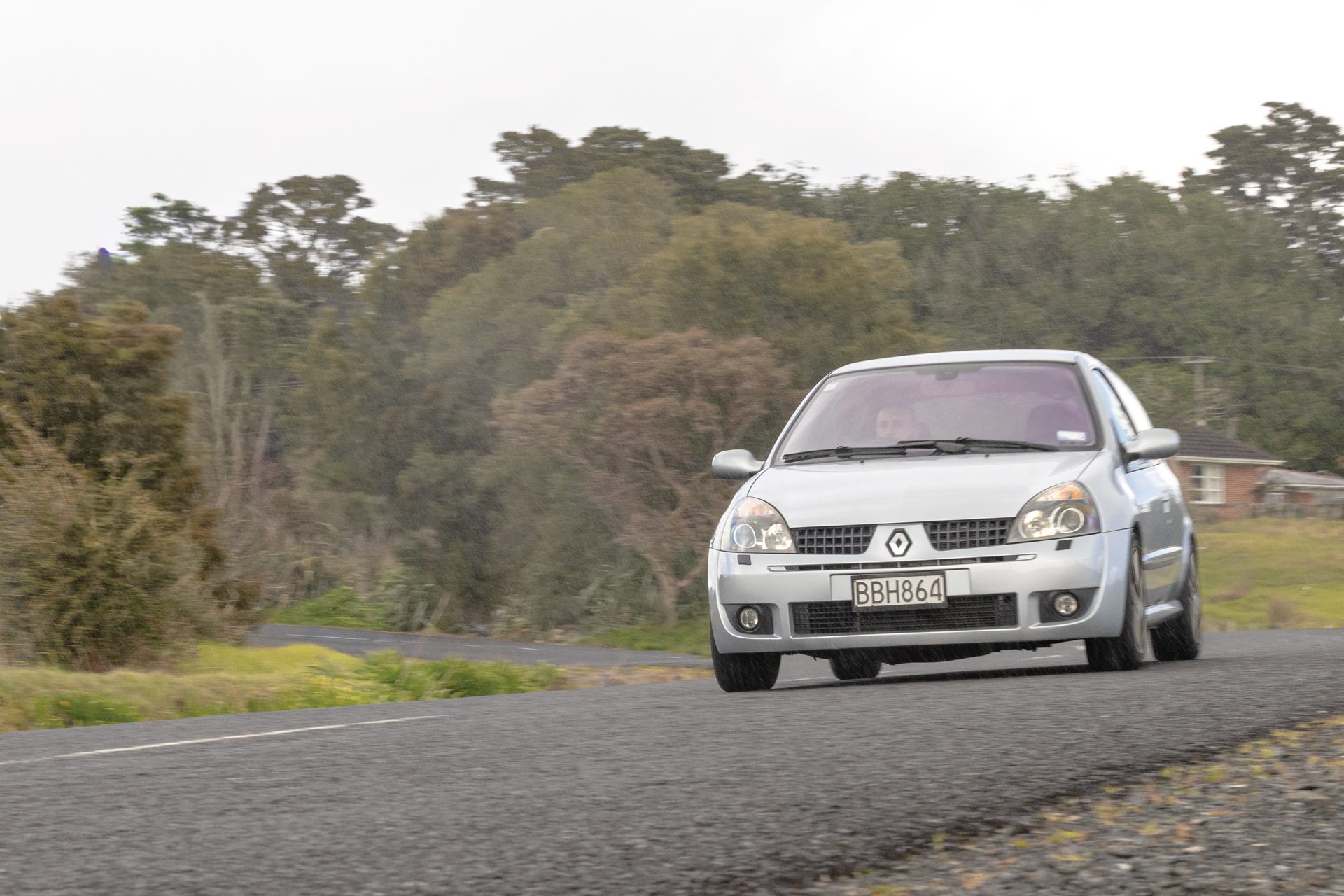
So how did he end with two of them? Once he had sorted the blue one, he was less inclined to use it everyday so he wanted another for daily duties. “I do about 400km a week. I drive from Pukekohe to the steel mill in Glenbrook so it’s all back roads and the Clio is perfect.”
Ariel likes the R.S for its power to weight ratio and dynamics. “They are very fun on back roads. It’s not fast but I really enjoy driving it, especially when it comes to the corners.”
As for his ultimate Clio, well that would be the V6. But he says it’s unattainable, and at the price they command, he’d spend the money on something else entirely. However, if he could get a yellow Phase I Clio, he’d like one of those.
Digging into the back issues of NZ Autocar, we found our road test review of a Clio R.S, admittedly a 182 version from 2004. Of the made over model we reckoned Renault Sport had woven yet more magic into the frisky French ferret. We noted the power had been given a boost to 131.5kW, made at 6500rpm, though torque remained at 200Nm, spun up at 5250rpm. Back then, peaky naturally aspirated engines were the go to for a driver’s car.
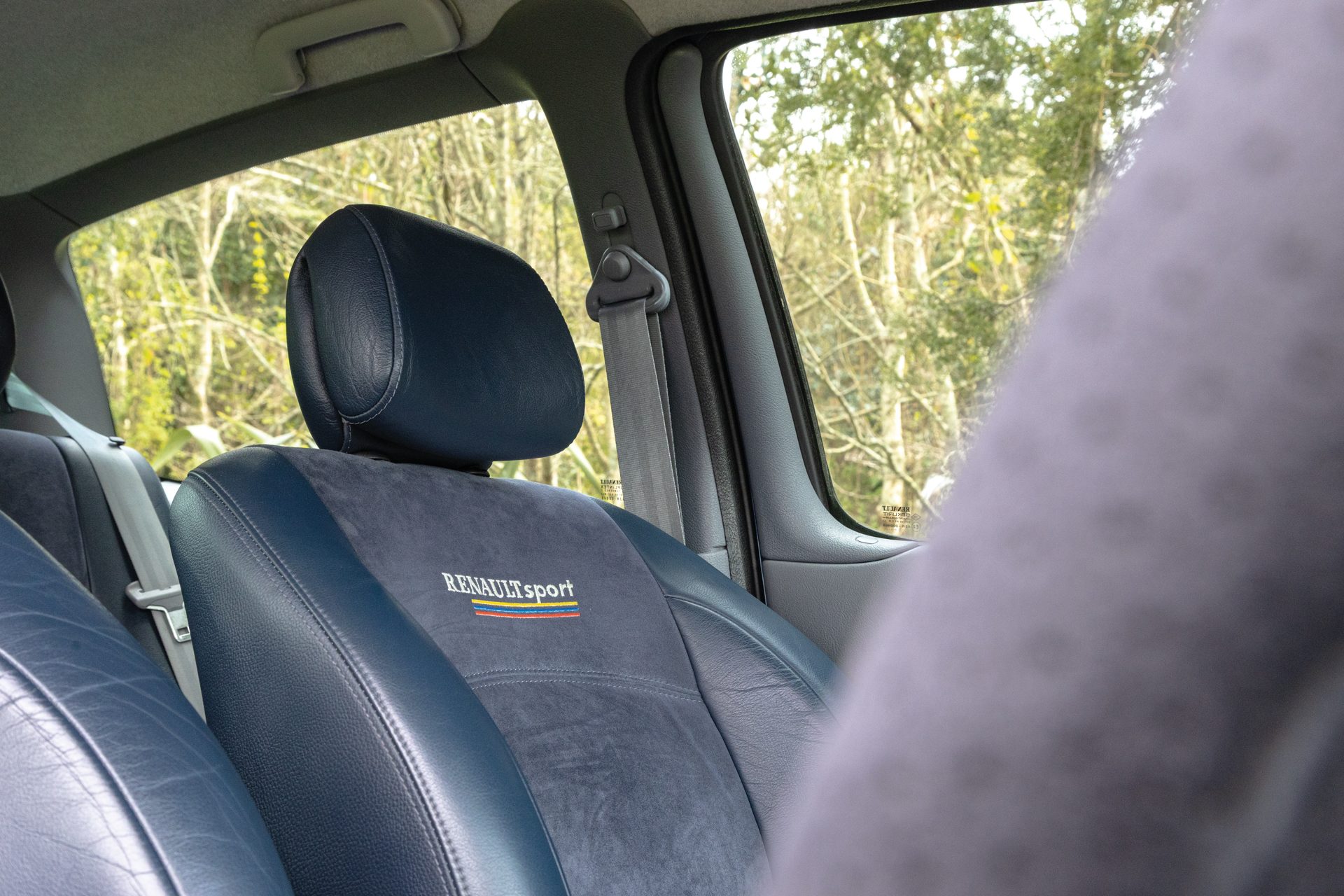
The 182 received myriad suspension changes that not only altered the caster angle, but added a smidge more to the wheelbase. Along with new dampers, sway bars and stiffer suspension mounts, the 182 gained specially developed Michelins (205/45 R16 Pilot Exalto) to give it better grip when cornering. We said all the enhancements added up to a cracking drive, the slightly firmer ride and heftier steering were positives.
That extra power we said could be felt through the steering as it twitched away, tyres struggling for grip. Through corners, the Clio, we said, was a sensation, the turn in sharp, resistance to understeer fierce. We reckoned you could feel the inside back wheel lifting slightly through the bends, the outside front digging in hard, those Michelins working overtime. “Find a twisting section of road and the car will lap it up, changing direction quickly and effortlessly.”
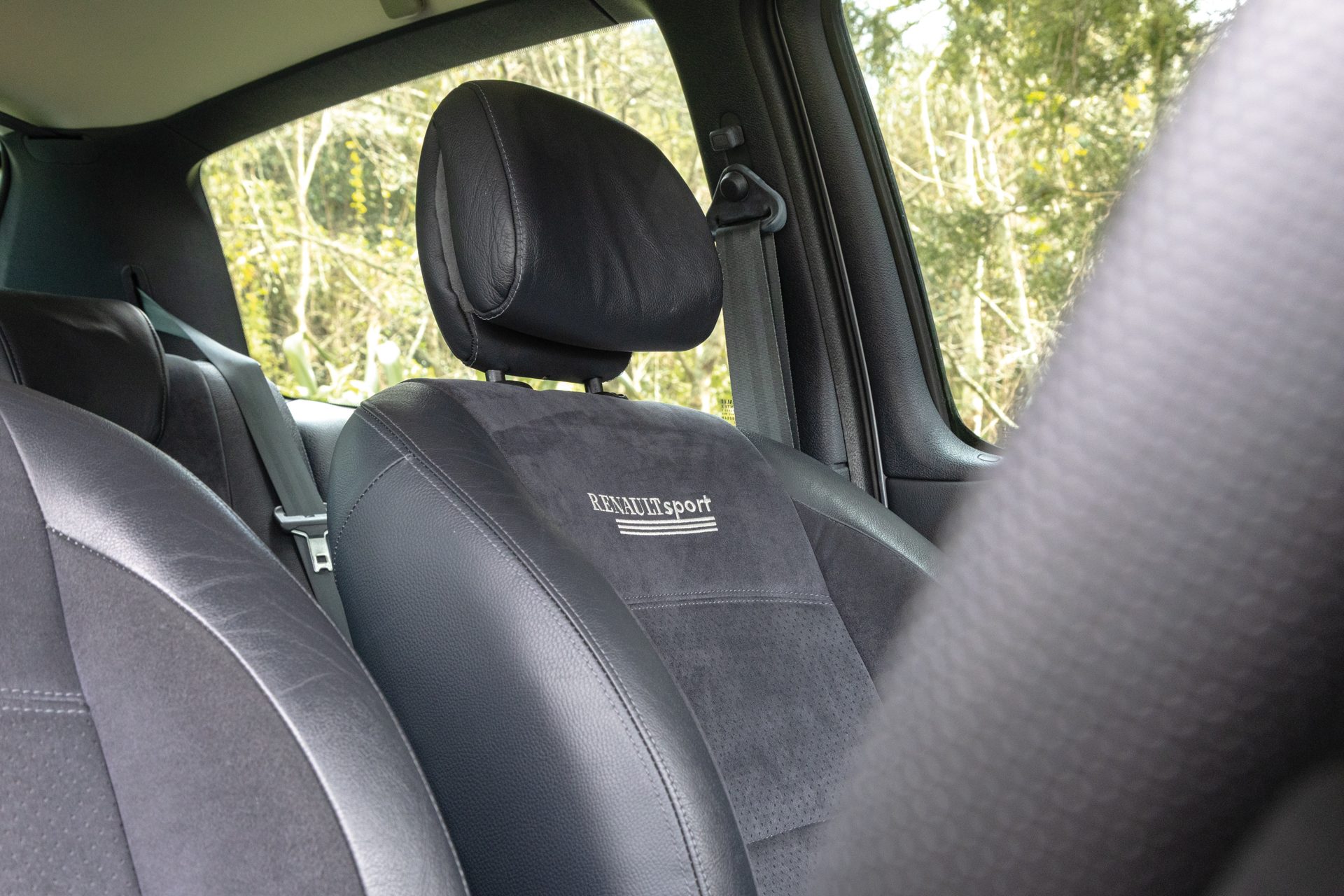
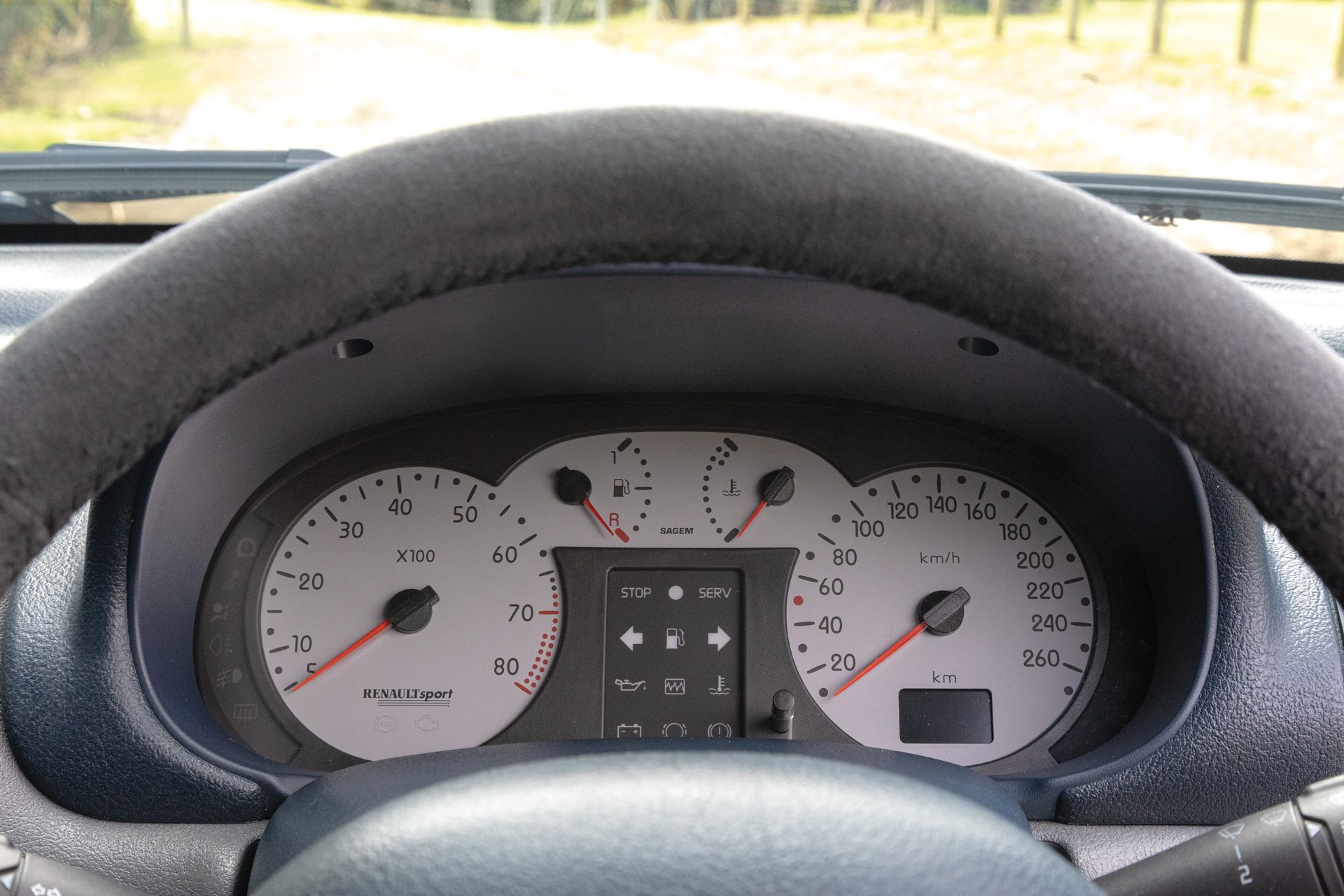
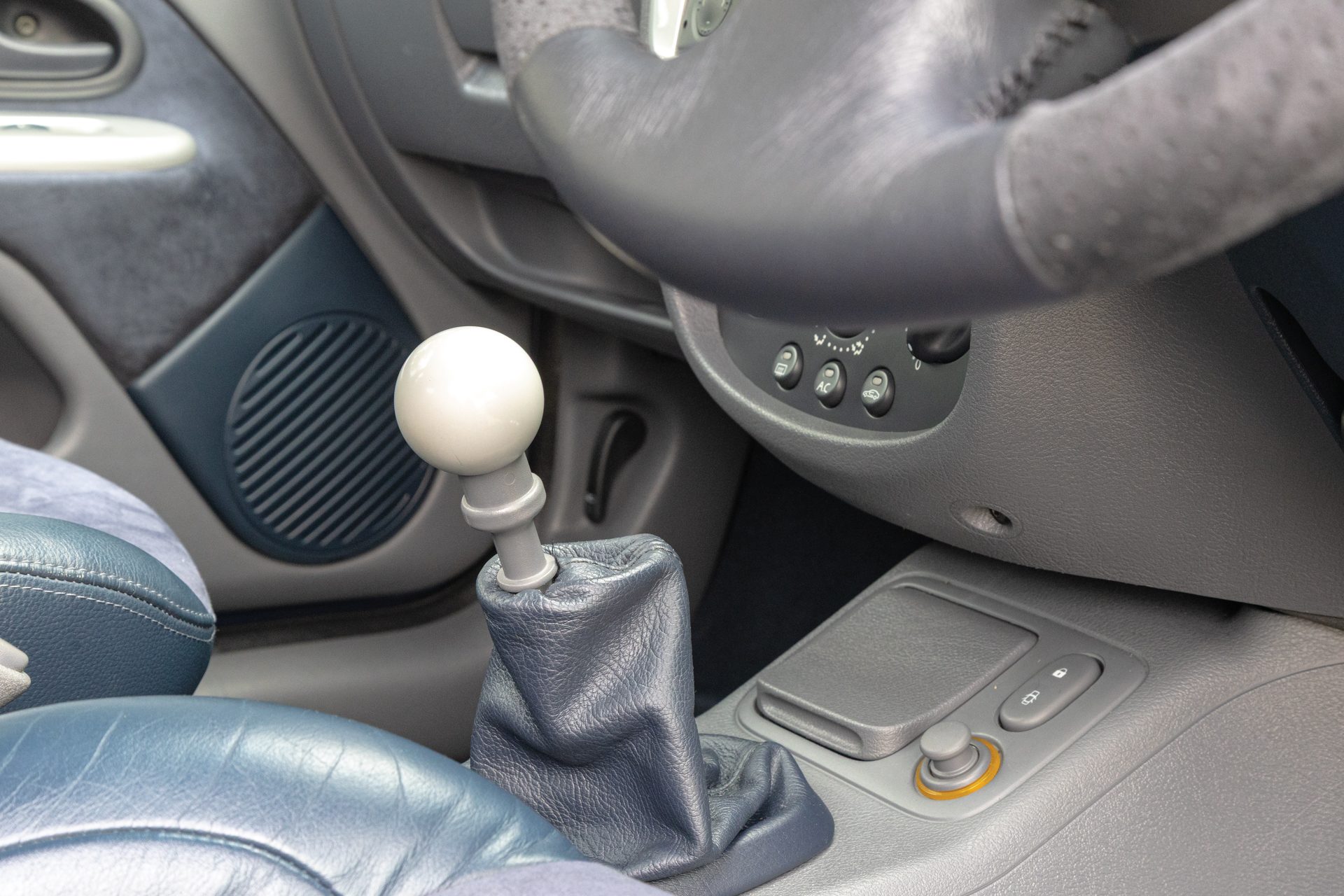
We recorded a time of 6.85s for the sprint, and 4.6s for the 80 to 120 while that rev happy engine did its best work in the 4000 to 7000 rpm range. While the five-speed wasn’t quite reference grade, it was easy to manipulate. The driving position we dubbed awkward, it being elevated with a cramped pedal box and a bit of a reach to the steering wheel. Call it a French quirk.
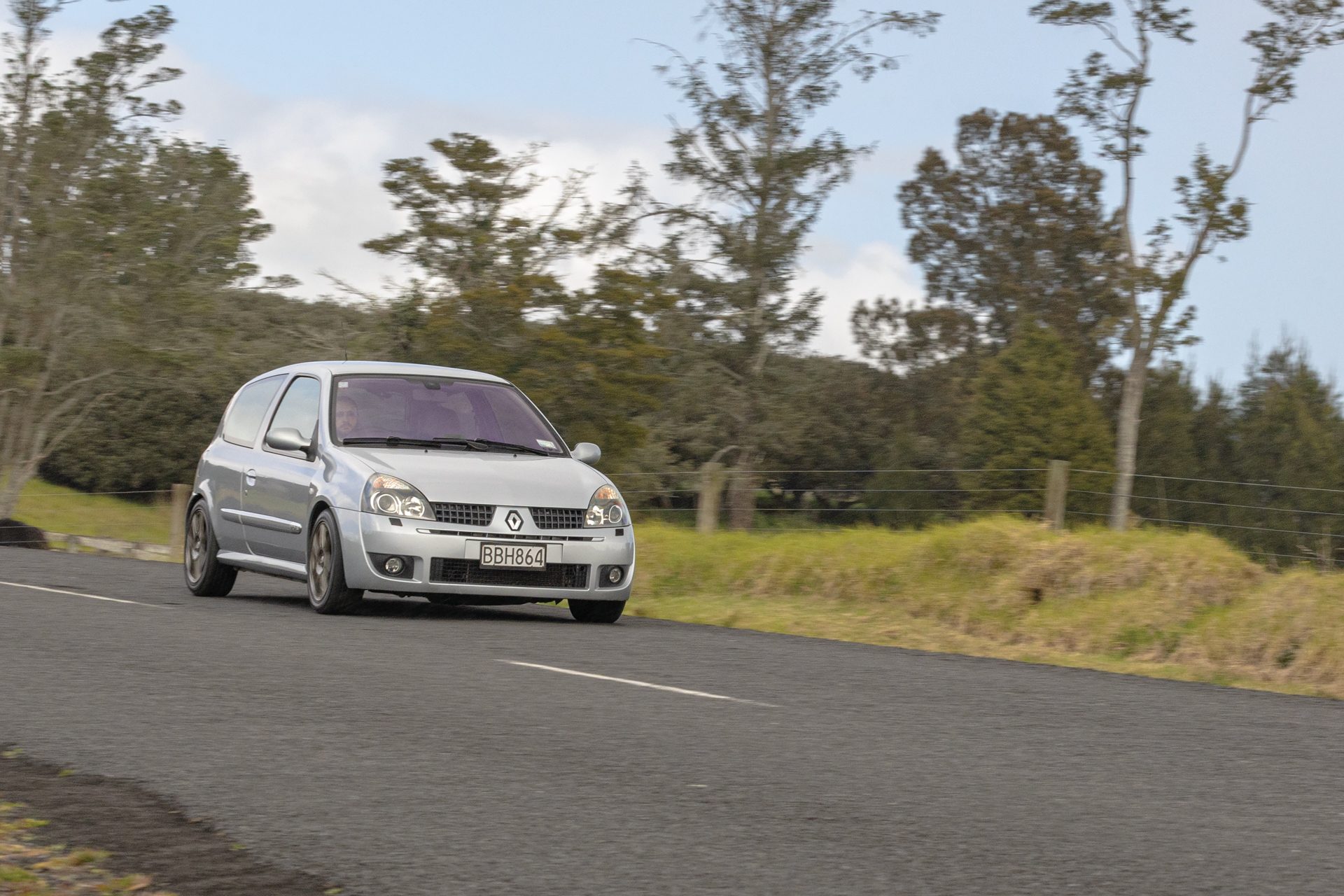
Back in 2004, a Clio RS182 would set you back $37,990. Now they can be had for $30k less, or more for one that has been looked after. But given the age and usability, mileage will be getting high. And they are rare. However, if you find a good one, it will be relatively cheap but extremely fun motoring.
The ultimate Clio
The Clio V6, with its mid-engine layout and bulging wheelarches is one of the most radical hot hatches ever produced. It was born from the Clio V6 Trophy race series which was created to promote the second-generation Clio in Europe. The competition cars, powered by a 3.0-litre V6 producing 285hp, were said to be spectacularly agile.
At the 1998 Paris Motor Show, Renault unveiled the Clio Renault Sport V6 24V concept. Inspired by the Trophy racers, it shared the same aggressive stance, flared arches, and mid-mounted V6 layout. Public response was overwhelming, prompting Renault to commission British firm Tom Walkinshaw Racing (TWR) to build a road-going version.
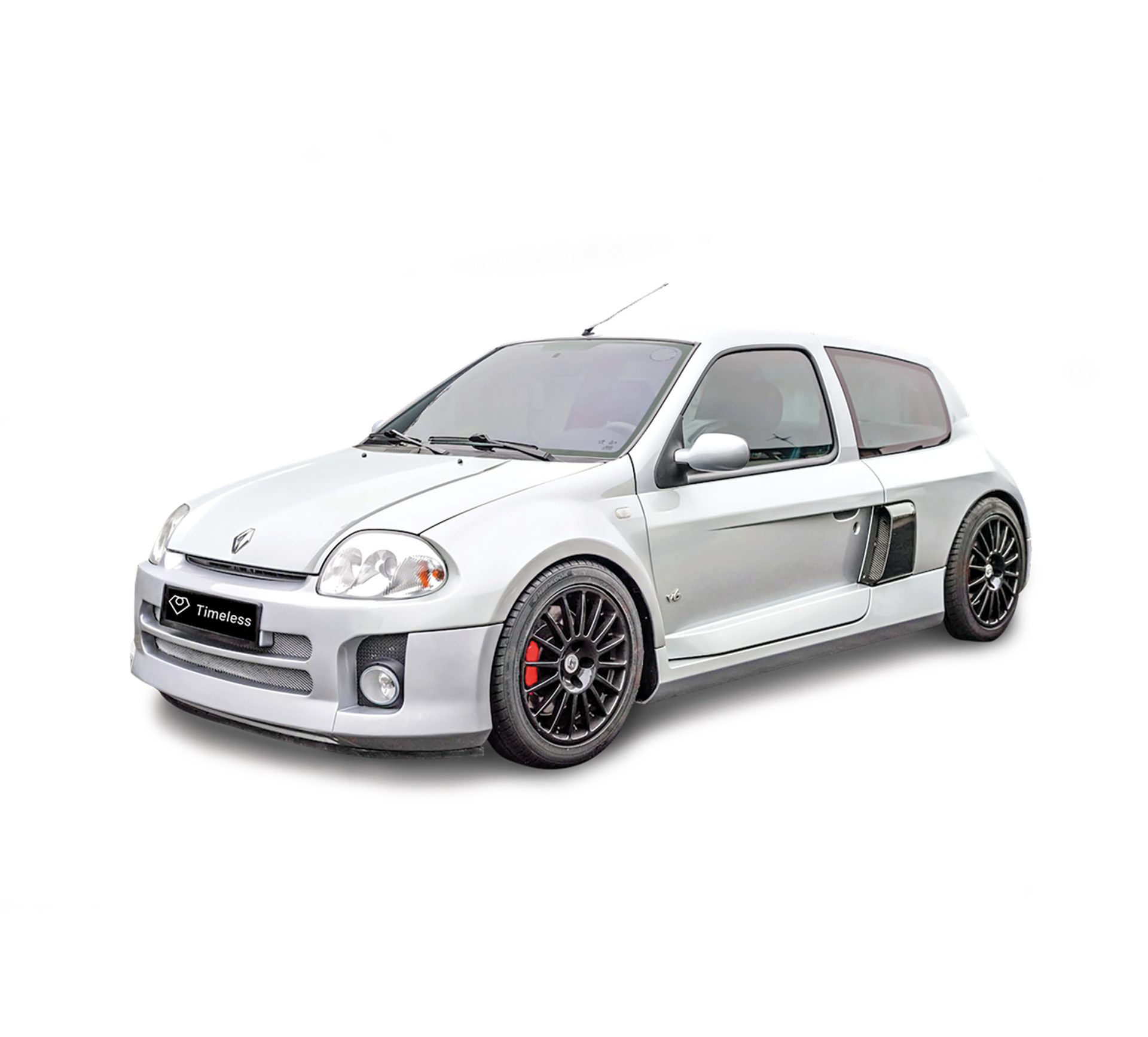
Phase 1: Built by TWR
Unveiled in 2001, the first Clio V6 stayed remarkably faithful to the concept. TWR hand-built 1631 examples in Sweden, 256 of those RHD.
Replacing the Clio’s rear seats was a naturally aspirated 3.0-litre V6 from the Laguna, reworked to produce 166kW and 300 Nm. Power went to the rear wheels via a six-speed manual gearbox and limited-slip differential, propelling the car from 0–100 km/h in 6.4 seconds.
The Clio V6 was 171mm wider and 66mm lower than the standard hatch, with bespoke suspension, larger brakes and 17-inch OZ Superturismo alloys. Practicality was minimal with 67 litres of luggage space in the nose and 45 litres behind the seats. But that wasn’t the point.
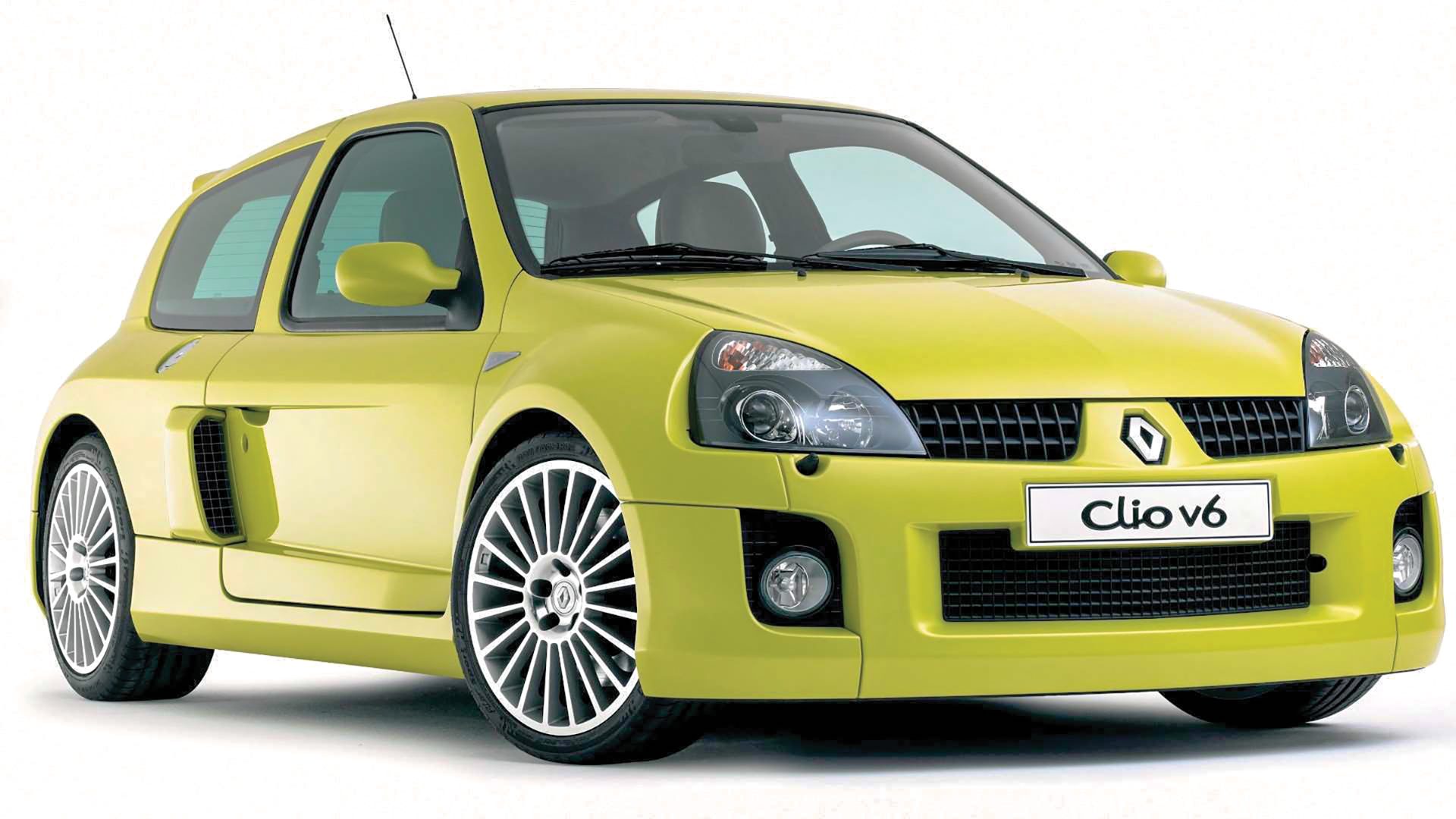
Phase 2: Sharper and Stronger
In 2003, Renault Sport took production in-house at its Dieppe factory for the updated “Phase 2” Clio V6 255. Power climbed to 187kW (255hp) thanks to reworked cylinder heads and improved induction, cutting the 0–100 km/h sprint to 5.8 seconds.
A longer wheelbase, wider front track, firmer suspension and revised chassis made it more composed and predictable at the limit, it was said. Only 1309 were built, 354 in RHD.
Of the two versions, the original is said to offer the rawer, more involved driving experience, especially on the limit. However, the Phase 2 is considered more usable and friendly. You have to admire Renault for making it, something ‘designed without compromise for sheer driving excitement’.