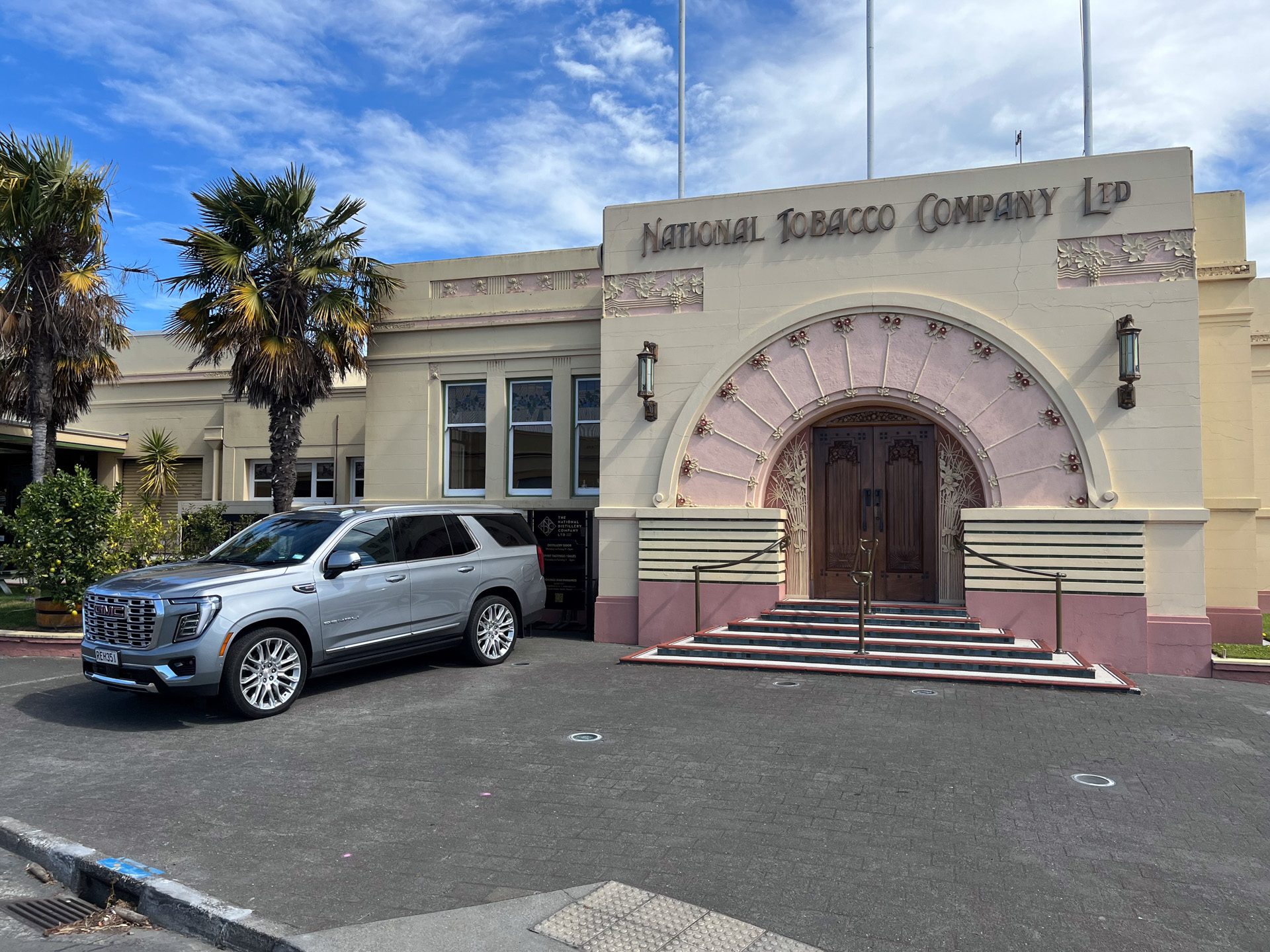

2025 GMC Yukon Denali Review
Words/Photos: Andrew Sluys|
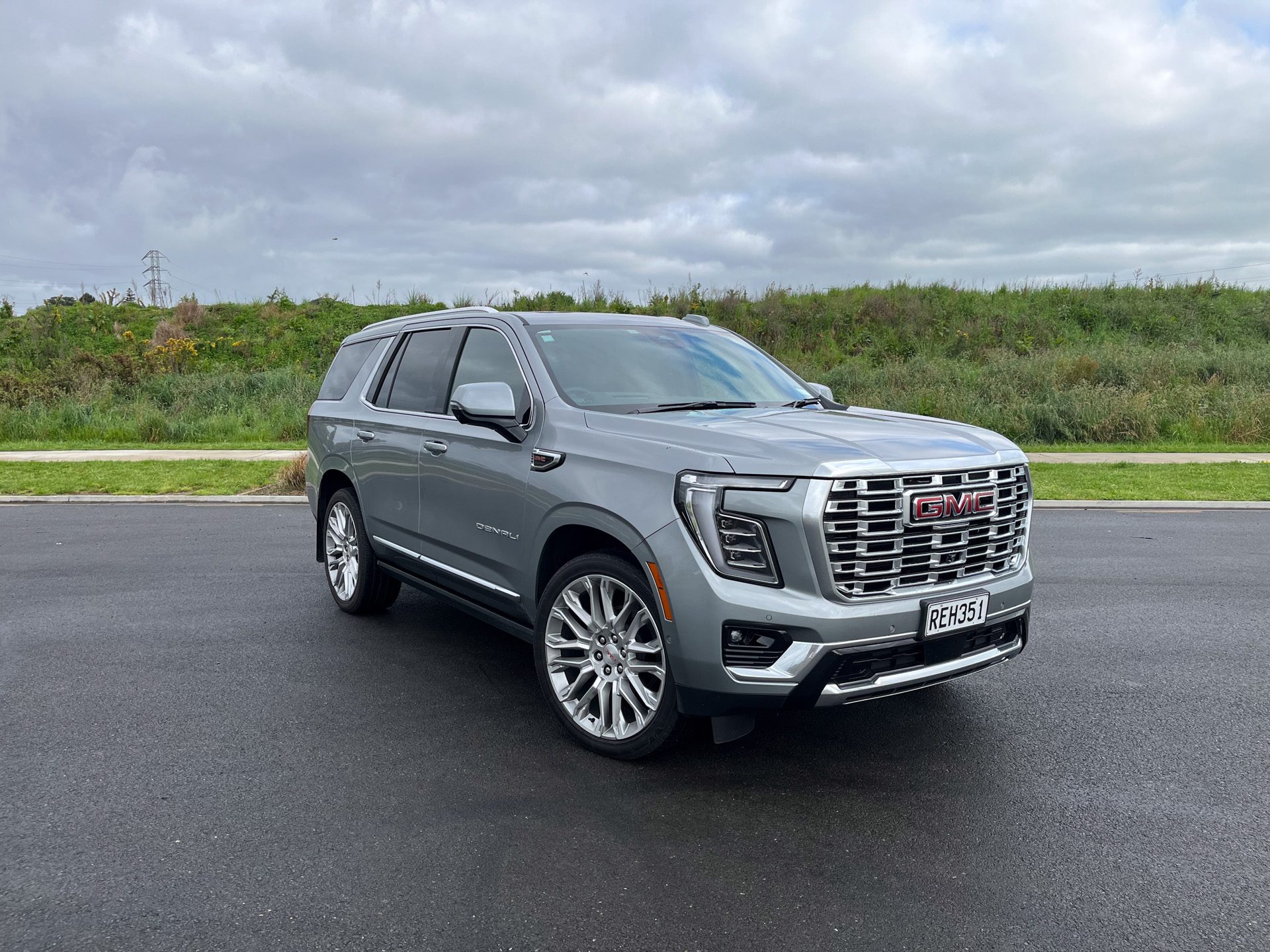
There’s big and then there is the GMC Yukon Denali. Covered in chrome and powered by a big V8, it’s a lot of American beef. We trip out in the XXL Jimmy, heading from Auckland to Napier and back.
Aroad trip in a big V8-powered wagon might sound like a figment of someone’s imagination in 2025. But thanks to the influx of XL American vehicles on to the New Zealand market, it is now a real possibility, with the right financial backing. The V8-powered wagon in question is the recently-introduced GMC Yukon Denali, the latest GM vehicle to land on Kiwi shores. And while it’s boasting a familiar 6.2-litre engine beneath the bonnet, it feels like a breath of fresh air at the pointy end of the large SUV market.
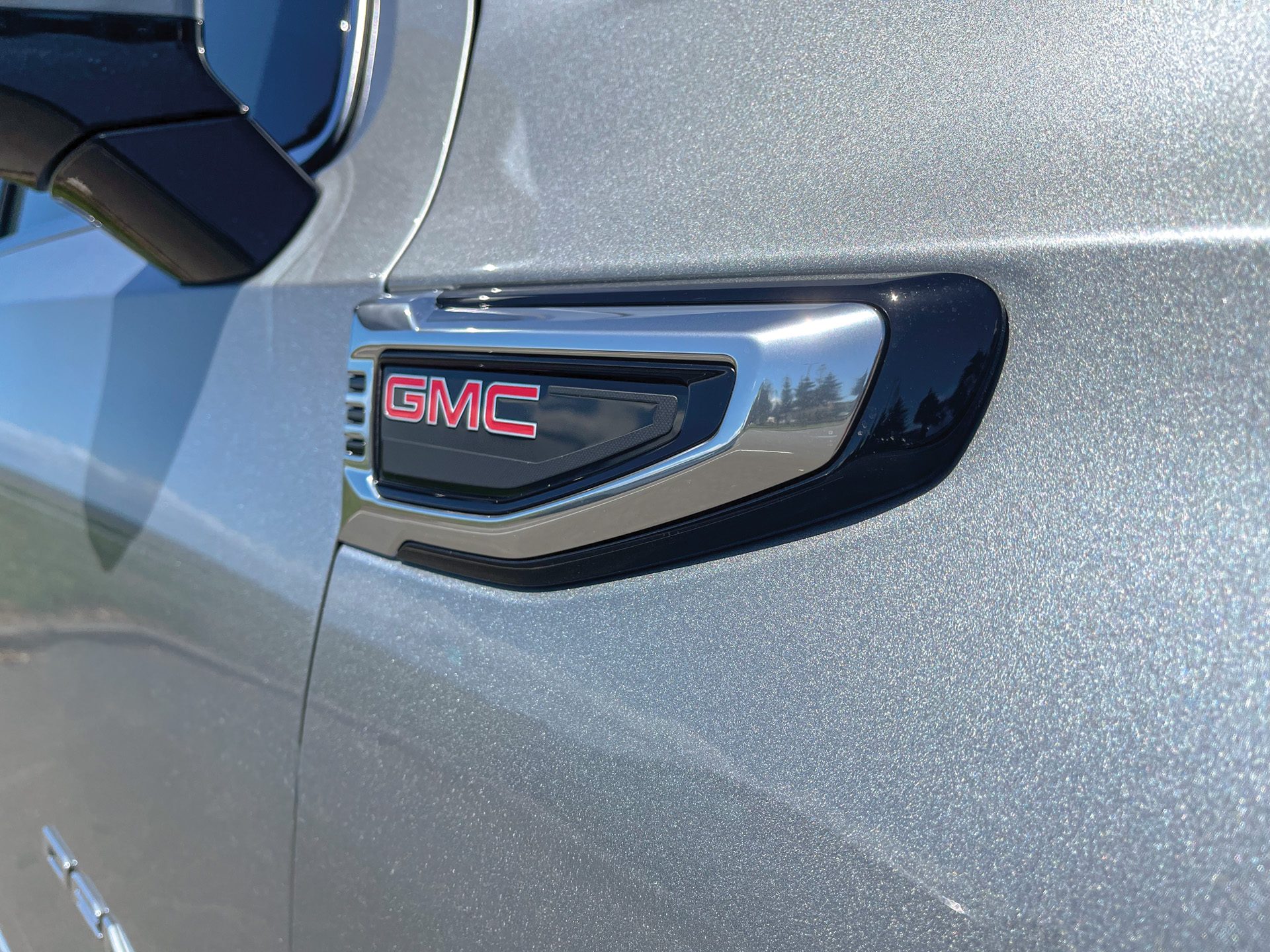


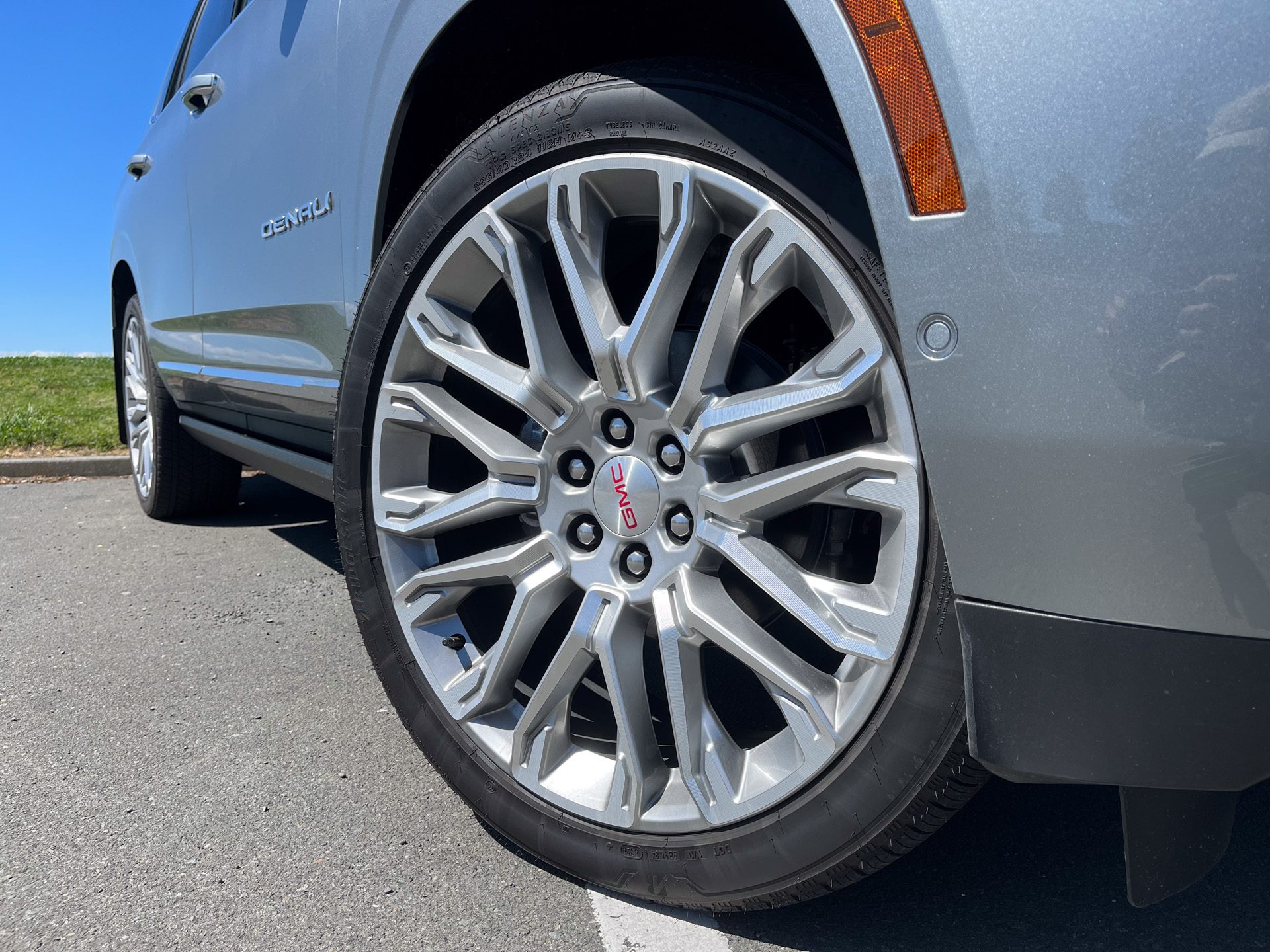
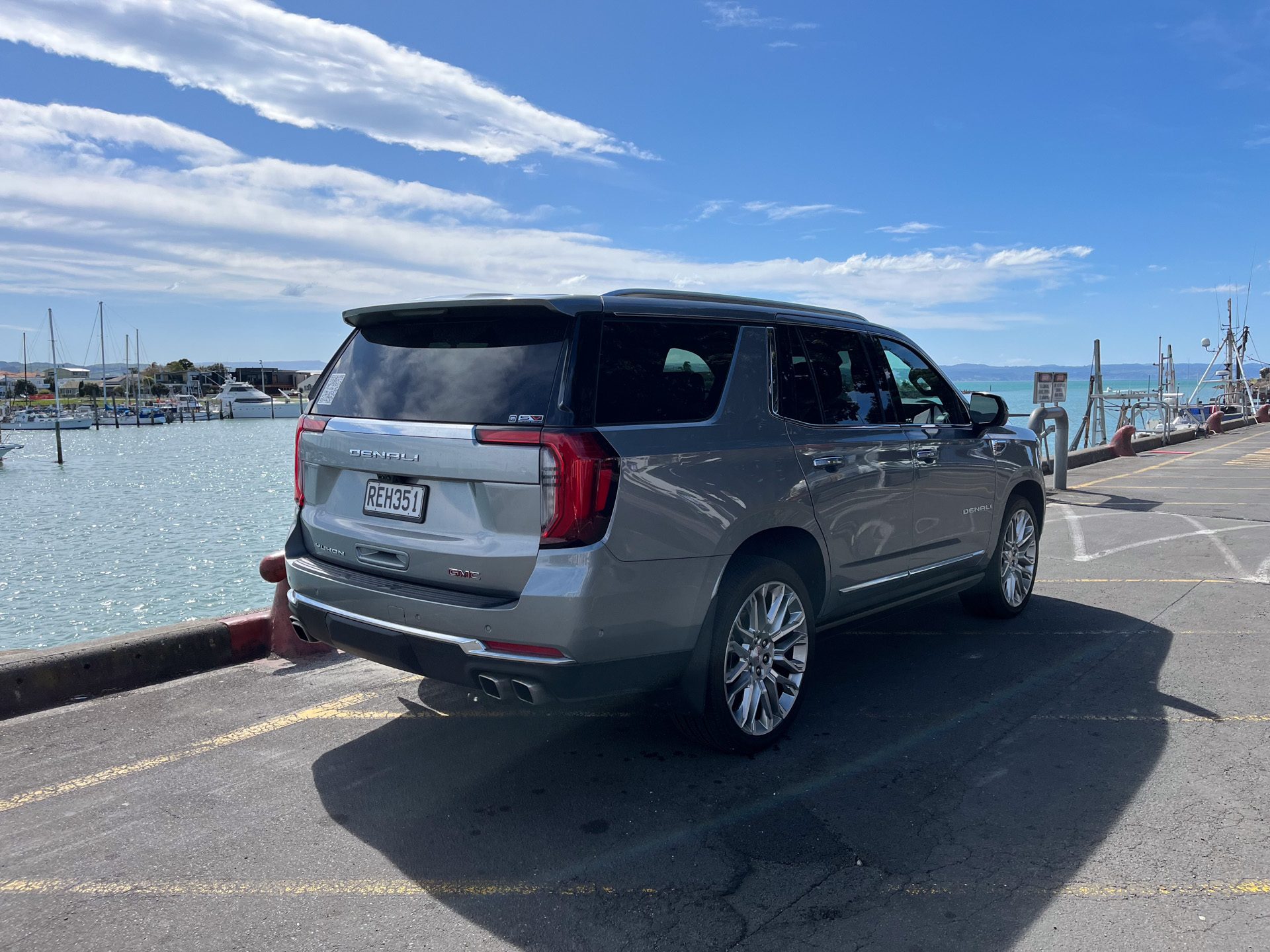
Starting from $184,990, buyers in New Zealand are offered just one Yukon model — the range-topping Denali. For context, this sits atop the Yukon range in the United States. As standard, the Denali gets a 6.2-litre petrol V8 which is paired with a ten-speed auto and a selectable four-wheel drive system. If this all sounds familiar, it’s because it is the same powertrain found in the Chevrolet Silverado 1500, also sold locally by GMSV. In the Denali, the eight produces 313kW and 624Nm, which will send it to 100km/h in 7.2 seconds according to GMSV. Though this performance figure isn’t impressive by modern performance SUV standards, it’s worth remembering the Yukon is a body-on-frame SUV that tips the scales at over 2.8-tonnes. Continuing the larger than life theme of the Yukon, the trimmings are no exception with its 24-inch alloy wheels and a massive chrome grille. It also gets automatic sidesteps that pop out from beneath, helping with the ascent into it.

Now the roadtrip in question involved escaping the dreary October Auckland skies, and chasing the sunny shores of Napier. Not an uncommon trip to complete for many supercity families, it covers a modest 416km, taking you through some of the best scenery the North Island has to offer.
With a fuel tank capacity of 91-litres, there weren’t any concerns around how many times I’d need to stop for fuel on the way down, but more so how much it would cost when it inevitably did run low during the return trip. GMSV quotes a combined fuel economy figure of 12.8L/100km for this Yukon. When I first collected the vehicle, it was showing 16L/100km, leaving me sceptical. After hitting the open road, it was quick to drop into the twelves, settling around 11.5L/100km. I figured this was achieved through the ‘Dynamic Fuel Management’ system that GM uses on most of its V8-equipped vehicles. This system will drop the engine down to four cylinders when not under load, effectively halving what the engine would otherwise be using fuel-wise.


As for my final fuel bill? The Yukon used around 110 litres of fuel, totalling $290 by the time I had returned to Auckland, which is certainly in the upper echelon of modern vehicles.
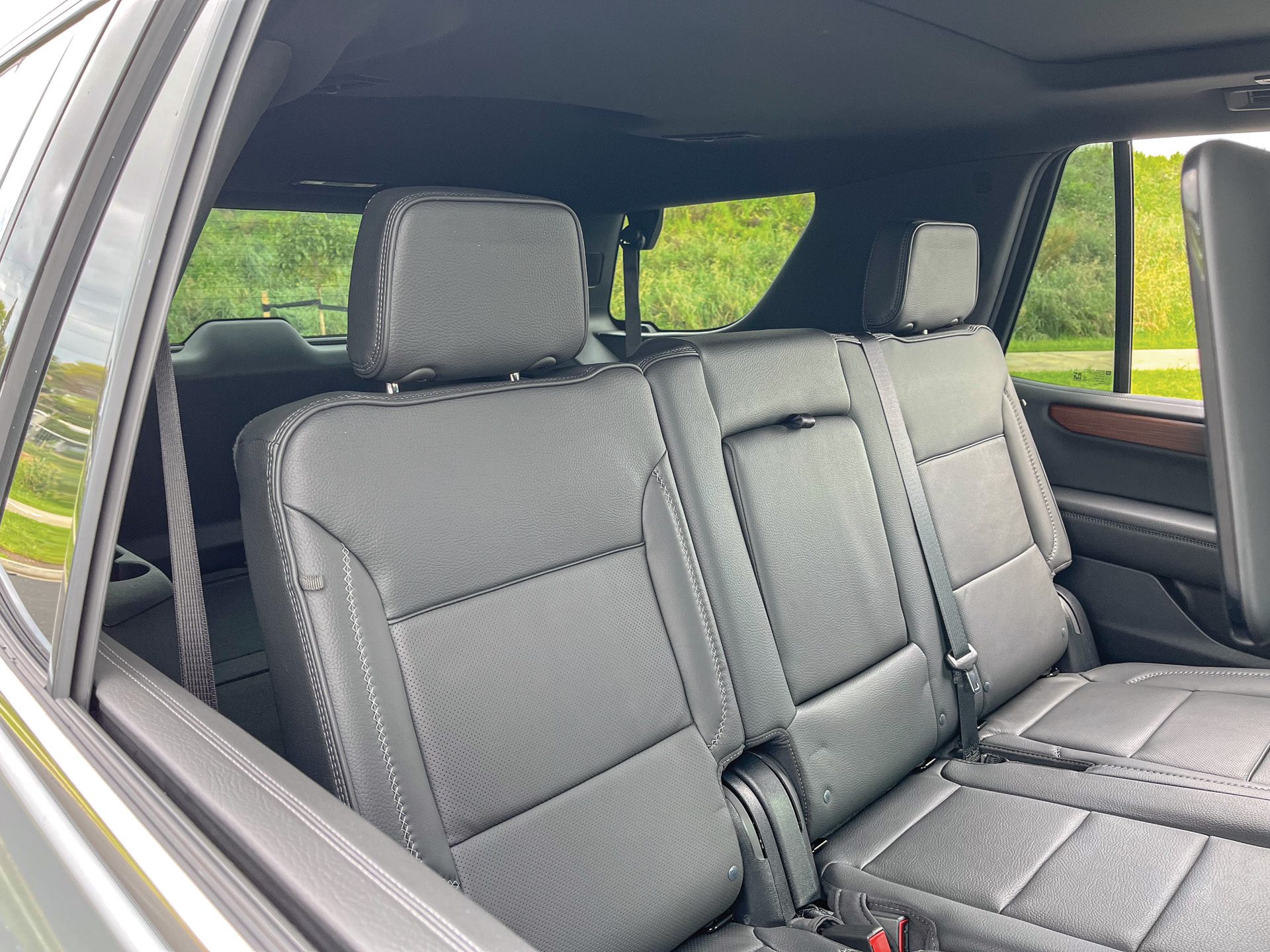
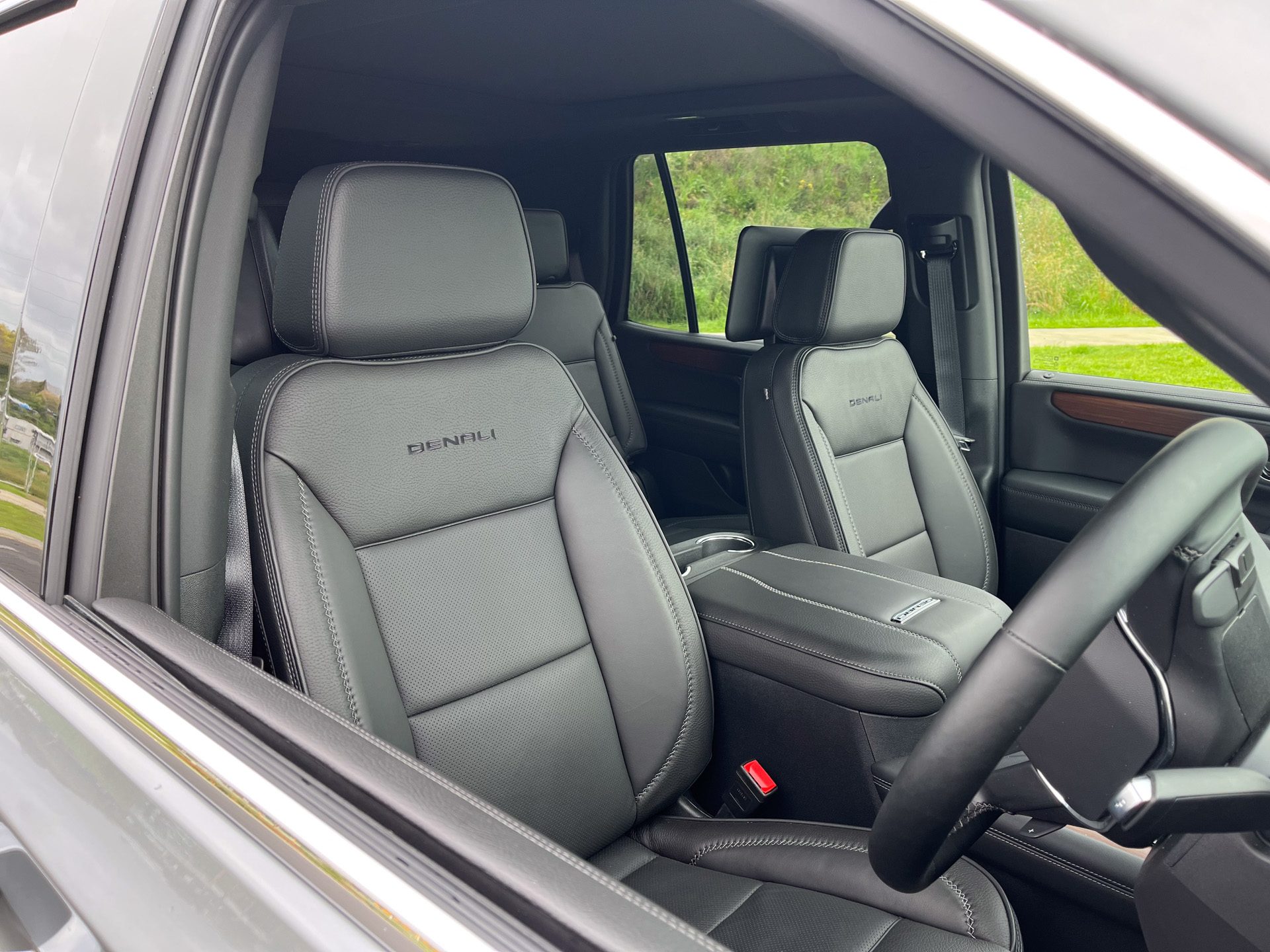
However, it’s hard not to feel a bit special behind the wheel of the Yukon. As impossible as it sounds, the interior of the SUV is even more impressionable than the exterior, with lavish trimmings in every corner. The large, couch-like leather seats are extremely comfortable and come with heating and cooling as standard. A 16.8-inch infotainment screen fills the centre of the dash and is flanked by an array of good old fashioned buttons and switches — no haptic touch to be found. The screen supports wireless Apple Carplay/Android Auto connectivity, and is complemented by a hefty 14-speaker Bose sound system. Driving information is displayed between the 11-inch digital cluster and the large 15-inch head-up-display.

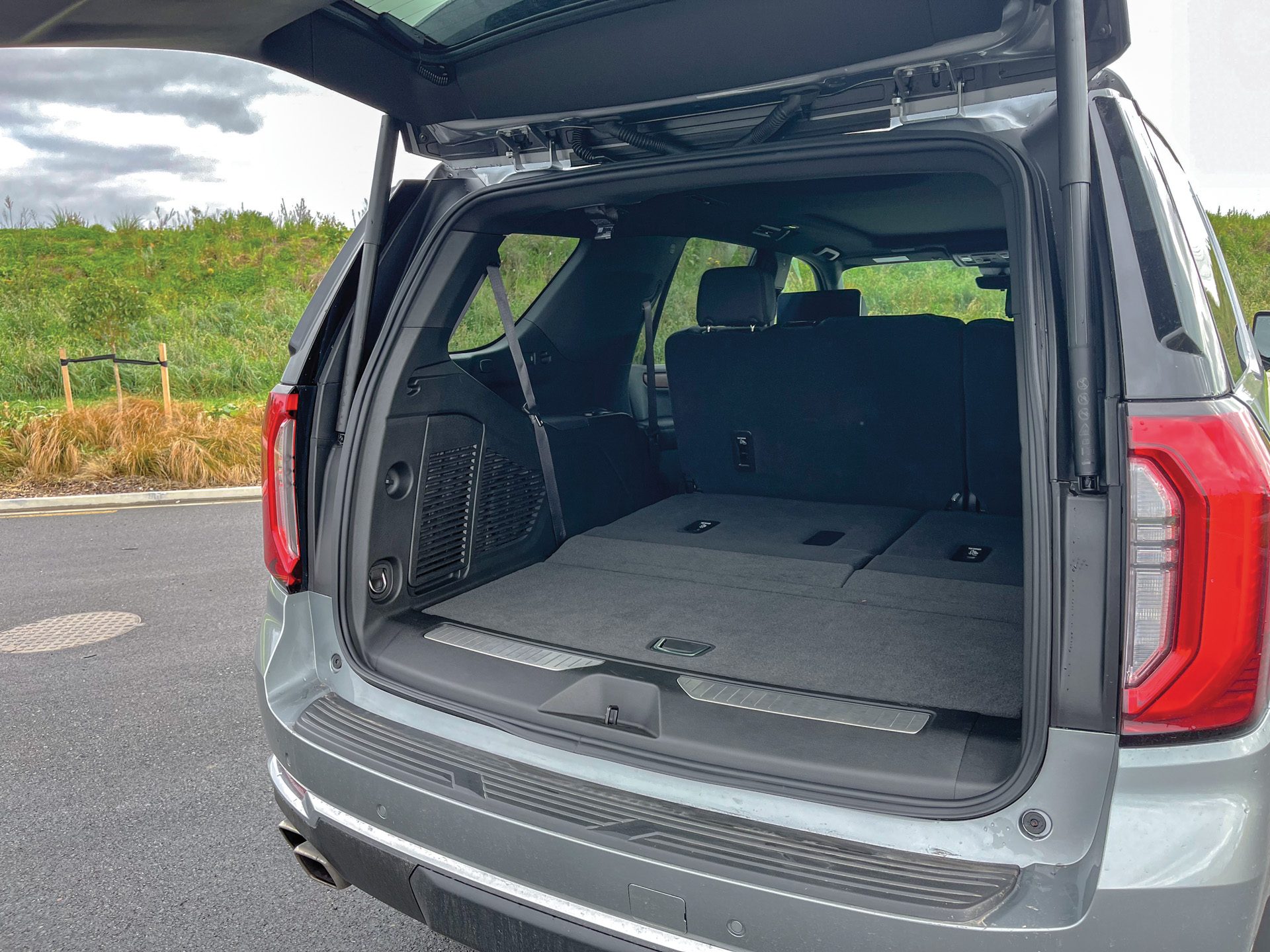
The comfort levels remain the same in the second row, with a pair of 12.6-inch LCD screens mounted in the rear of the front seats. The seat heaters also extend to the second row. As mentioned, practicality is one aspect the Yukon does well. It can carry up to eight occupants, and still has room for 722 litres of luggage behind the third row when the seats are in place. Fold these down and you get access to 2056 litres. Fold the second row down, and it opens up a cavernous 3480 litres of space — which doesn’t feel far off what’s offered by a small van. Squeezing three occupants across the third row is never an easy task, even with this two-metre wide SUV, so keep that in mind. For towing, it is rated up to 3628kg braked, which represents a best in class claim for large SUVs in New Zealand.
Despite sharing underpinnings with the Silverado 1500, the Yukon Denali benefits from a much fancier suspension system, contributing to its impressive ride quality. Thanks to a combination of both air suspension and magnetic ride control, the massive SUV is kept well in check across all manner of New Zealand roads. Rutted gravel trails are soaked up just as easy as coarse asphalt, and the road noise is kept to a minimum. This is all particularly impressive considering the 24-inch wheels that it rides upon.
Considering the Yukon doesn’t claim to be a performance SUV of any type, I held low expectations for it in the twisty stuff. While the straight line performance is merely adequate, the Yukon’s composure through corners surprised me. Sure, it still has the tendency to lumber about when pushed, but not to the level you’d expect of a 2.8-tonne SUV.
On the safety front, I was surprised by the passive nature of the driving assistance systems in the Yukon. Systems such as adaptive cruise control, lane keep assist, and forward collision assist come as standard, but it skips out on any sort of driver attention monitoring. The lane keep assist and parking assistance systems are connected to vibrating panels in the seats, which is quite an alarming sensation at first, and takes some getting used to.
After accumulating almost 1000km, in this American SUV, I can confidently say that it’s one of the most comfortable ways to travel the country. This obviously comes with the caveat of fuel costs, as you’ll also be spending a significant amount in doing so.
In saying this, I’m not sure there’s anything else in the SUV market that quite compares with what the Yukon is offering at $184,990. The Land Rover Defender 130 is around $10,000 cheaper, and also boasts a big V8, but the fancy British off-roader is almost a different proposition entirely. There’s also the Toyota Land Cruiser and Nissan Patrol to contend with on paper (and are a fair bit cheaper), but the American style of luxury offered here is different again.