

2014-2022 Nissan X-Trail – ReView
Words: Richard Edwards | Photos: Alex Schultz
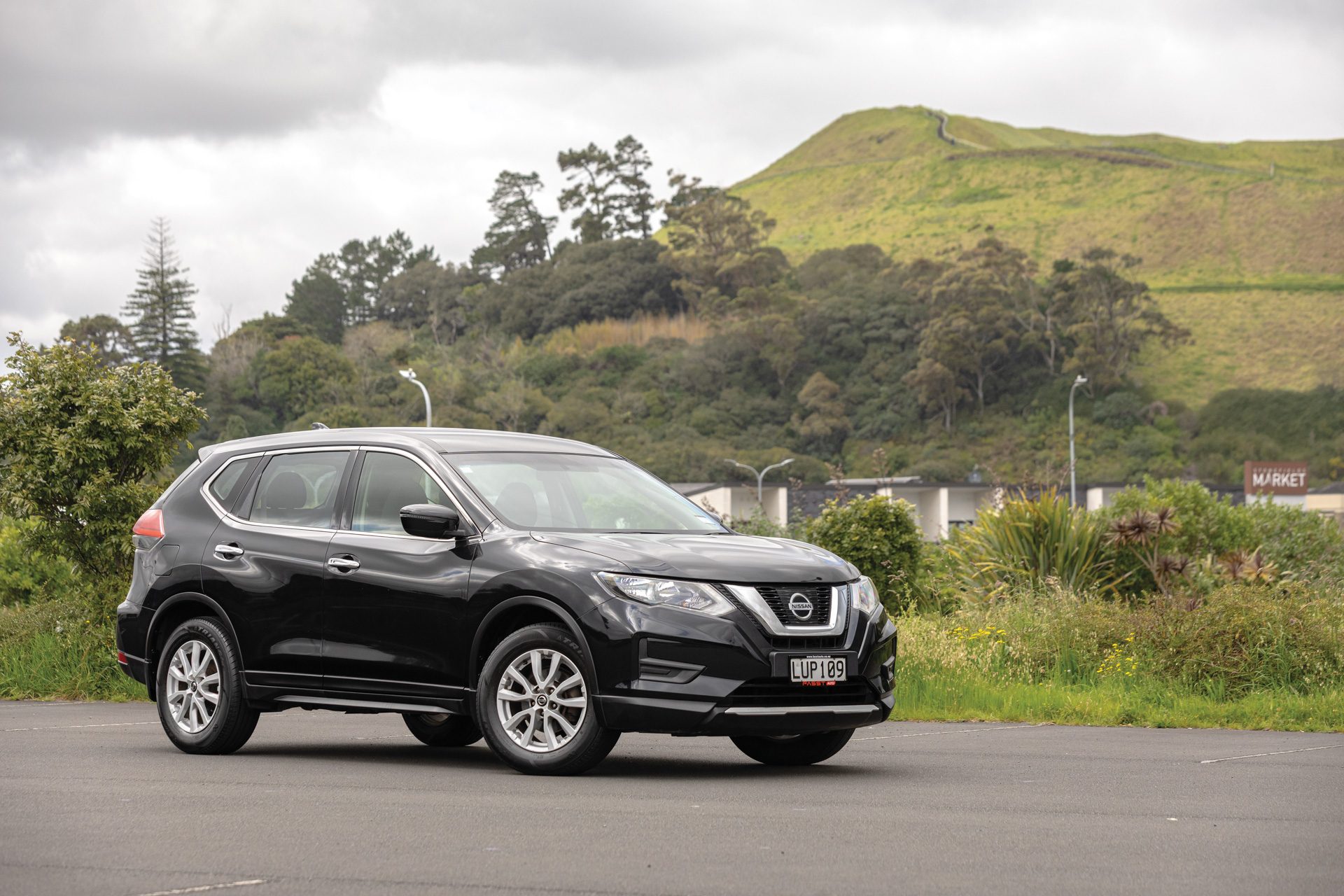
The third-generation X-Trail marked Nissan’s shift from square-jawed styling to a smoother all-rounder. Arriving here in 2014, the T32 was curvier, quieter and more family-friendly than its predecessors, yet still capable on gravel or the odd ski trip. Today it’s one of the most common mid-size SUVs on the used market, with plenty of NZ-new cars and even more tidy Japanese imports.
NZ-new models
Local X-Trails all ran the same proven 2.5-litre four-cylinder petrol (126kW/226Nm) paired with Nissan’s Xtronic CVT. It’s not fast, but it’s quiet and linear, suiting the relaxed nature of the car. Most were front-drive, though AWD was available on upper trims.
The range opened with the ST, a five-seat model with cloth trim and basic tech, followed by the ST-L, which brought leather, power-adjust heated front seats, satellite navigation, Nissan’s Around-View Monitor camera system and seven seats. The flagship Ti gained larger alloys, a panoramic roof, powered tailgate and extra safety tech, but dropped the third-row option.
A 2017 facelift freshened the styling and added active-safety features like AEB and blind-spot monitoring. Ride and noise suppression also improved slightly, keeping the X-Trail competitive against the RAV4 and Outlander of the day.

Japanese-import variants
Japanese-market X-Trails look the same but differ under the bonnet. The most common are the 20X and 20Xi, powered by a 2.0-litre petrol engine and CVT, while the popular Hybrid 20X/20Xi pairs that motor with an electric system using Nissan’s “one-motor, two-clutch” setup. The hybrids feel perkier in town and return about 6 L/100 km, compared with around 8.5 L/100 km for the 2.5-litre.
High-spec imports often feature heated everything, 360-degree cameras and sometimes ProPILOT lane-assist from the 2017 Japanese facelift. The catch is that most come with Japanese-language infotainment, and some driver-assist systems may not function fully unless converted.
On the road
NZ Autocar’s period review of the 2.5 Ti described the engine as “an unremarkable thing, but perfectly adequate for the task,” and that sums up the drive. The CVT keeps revs low, the steering is light, and ride comfort is excellent on Kiwi roads. The trade-off is a slightly detached feel and the typical CVT flare under hard throttle, but for day-to-day family duty the X-Trail is easy and quiet. All-wheel drive models offer confident grip on gravel, and towing capacity of 1500kg covers light trailers. Handling is secure rather than sporty, which suits its brief perfectly.
Inside
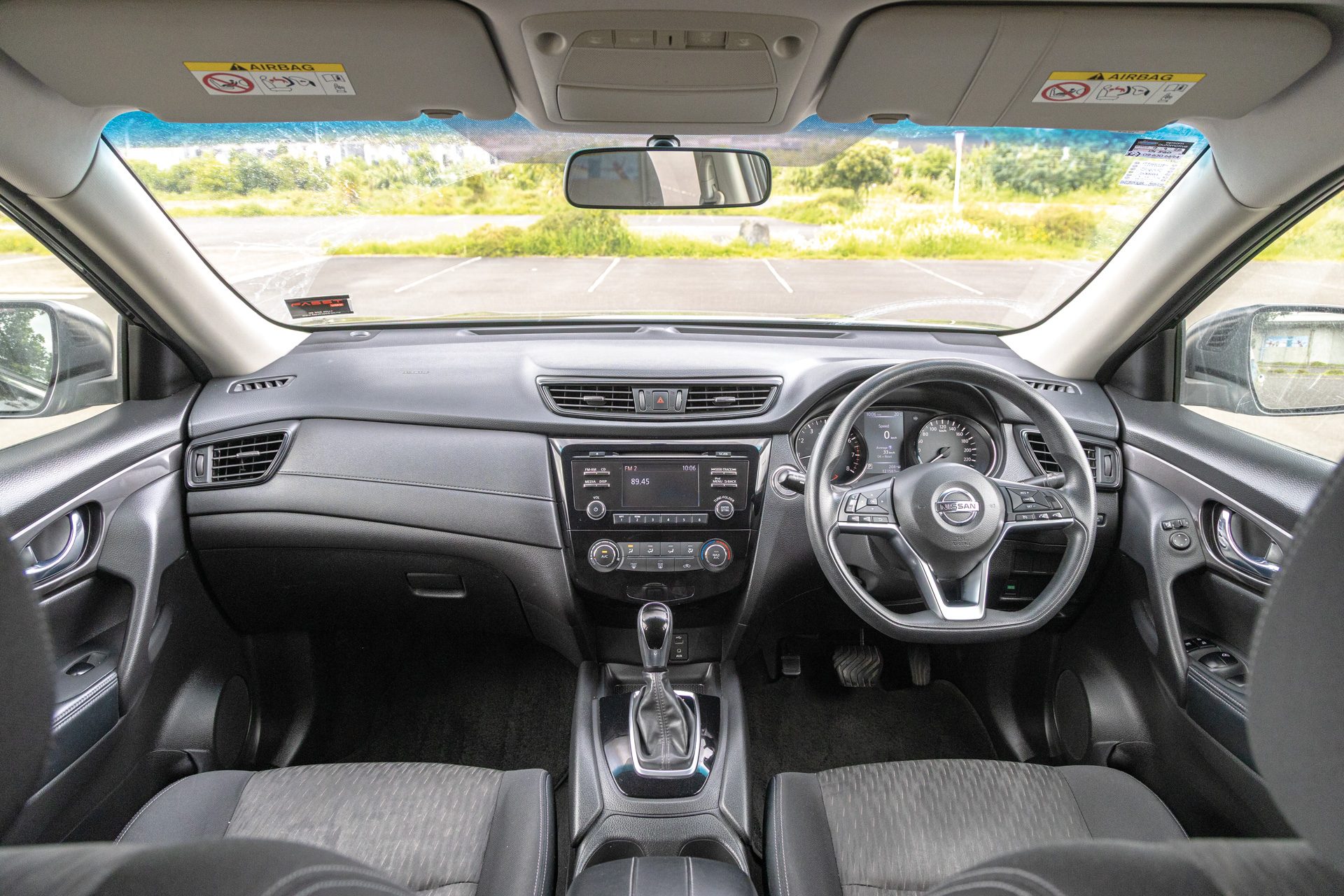
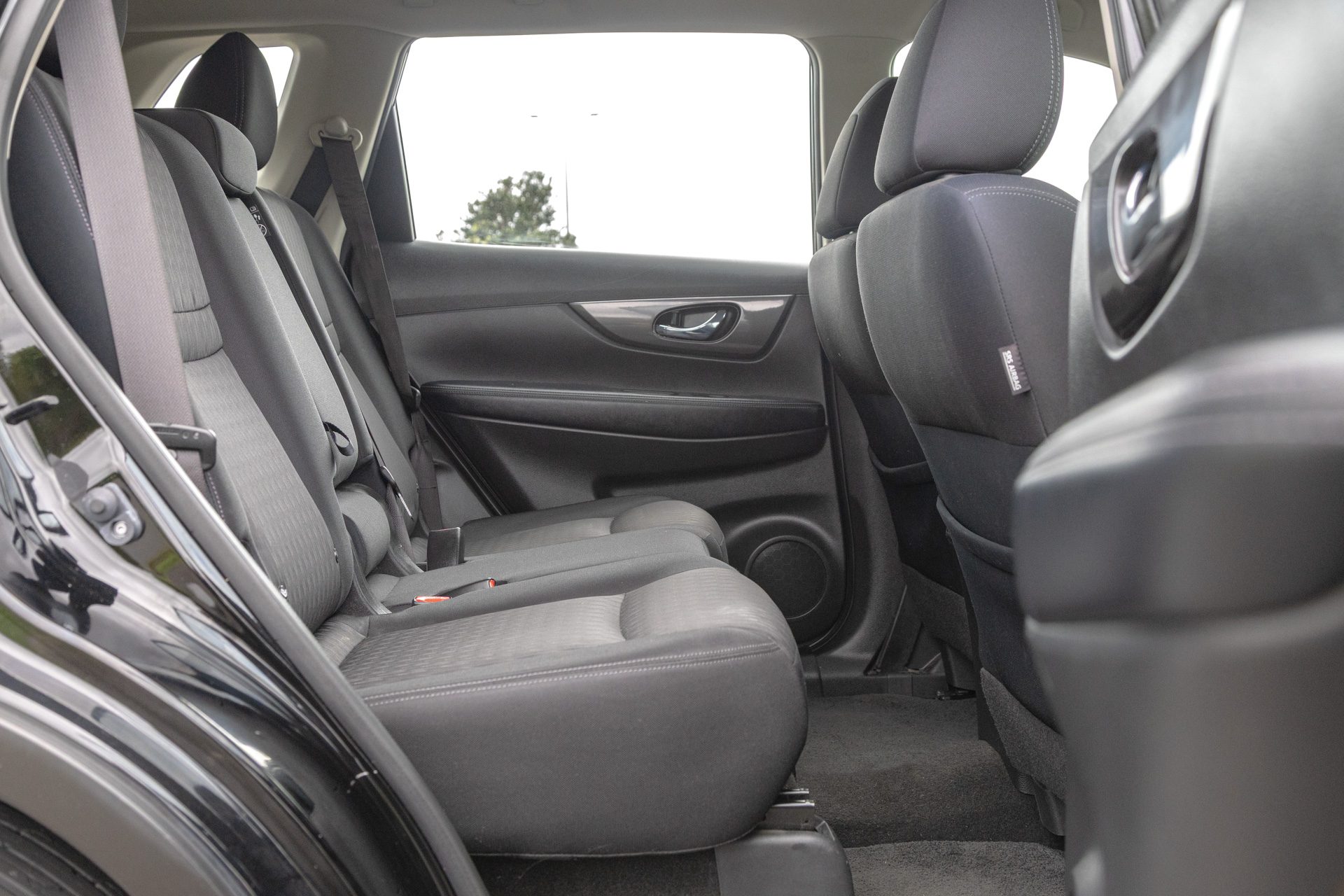
Interior practicality is the X-Trail’s ace. Wide-opening doors and flat-folding rear seats make loading simple, and the sliding second row lets you prioritise legroom or boot space. The sixth and seventh seats are best reserved for kids but fold flush into the floor when not needed.
Material quality improved after the facelift, and the panoramic roof of Ti models brightens the cabin. Visibility is strong, and the seating position is upright and comfortable.

What to watch
Mechanically the T32 is sound, but CVT maintenance is non-negotiable. Use only Nissan NS-3 fluid and change it roughly every 50,000 km. Signs of trouble include shuddering take-off, delayed engagement or high-rev flare. Replacements are costly, so history matters.
Hybrid transmissions in the X-Trail are also known to be far from solid, with bearing and input shaft failures recorded. Have the battery checked and confirm smooth hand-offs between petrol and electric drive. Low 12-volt voltage can trigger hybrid warnings, so a healthy auxiliary battery is essential.
Other common niggles include faulty tailgate struts on Ti models, occasional camera calibration issues after repairs, and standard Takata-airbag recalls on early cars. Overall reliability is otherwise strong.
Ownership and running
Servicing is straightforward and parts are widely available. The 2.5-litre uses a chain rather than a belt, and fuel economy of 8–9 L/100 km is typical for a mid-size petrol SUV. Hybrids can do better, but replacement batteries are expensive if neglected. Insurance and tyre costs are average for the class. Ride comfort and ease of use make the X-Trail a stress-free daily. Owners tend to keep them long-term, and the cabin wears well.
What to pay
Trade Me listings suggest a broad spread for the T32 X-Trail. Early 2014–15 models with higher mileage start around $15,000–$18,000, while mid-spec 2016–18 cars with average kilometres sit between $18,000 and $22,000. Late-model NZ-new or high-spec imports from 2019–21 typically fetch $22,000–$26,000, with hybrids or low-km Ti variants nudging higher.
Prices below those ranges often reflect high kilometres or patchy service history—especially around the CVT—so paying a little extra for a tidy, well-maintained example is usually worthwhile.
Verdict
The T32 X-Trail isn’t a head-turner, but it nails the brief for a practical family SUV. It’s quiet, capable, and simple to own, provided you buy one that’s been properly serviced. The NZ-new ST-L remains the pick of the bunch for features and comfort, while a late-model 20Xi Hybrid import offers better fuel economy for city users.
Look for tidy examples with documented CVT servicing and Takata recall work completed. Do that, and you’ll find the X-Trail every bit as dependable as its reputation suggests. .
Thanks to Fasst Auto for the loan of the Nissan X-Trail. Find more of their cars at www.fasstauto.co.nz